At a glance
Our car: a 2006 Suzuki Grand Vitara 2 with the 2.0 petrol engine and a four-speed automatic.
Our time with it: two years and nearly 50,000 km, including road trips to Albania, Montenegro and Croatia.
Good for: an affordable first overlanding car with real 4x4: full-time drive, a centre diff lock and low range.
Not for: anyone who wants to sleep inside the car or keep fuel bills low.
What broke: nothing, in two years and 50,000 km.
Our first overlanding car
Before the Land Cruiser, there was the Suzuki. The second-generation Grand Vitara, built from 2005 to around 2015, was the car that got us into overlanding. We wanted something we could drive every day in the city and still take far off the tarmac at the weekend, without spending a fortune, and the Grand Vitara ticked all of those boxes.
Ours was a 2006 model with the 2.0-litre petrol engine and a four-speed automatic gearbox. With a rooftop tent on the roof, it took us on a 5,000 km Balkans road trip to Albania, up the Biokovo road and around the Durmitor Ring.


Engines
In Europe the Grand Vitara 2 came with 1.6, 2.0 and, from 2008, 2.4-litre petrol four-cylinders, a 3.2-litre V6 at the top of the range, and a 1.9-litre diesel (1,870 cc) sourced from Renault. Some markets also got a 2.7-litre V6. If you are buying one for travel, the 2.0 and 2.4 petrols are the simplest choice, and the diesel gives you better range.
What it does well
The Grand Vitara is not a classic body-on-frame off-roader, but it is much closer to one than most SUVs. The body has a built-in ladder frame, and the drivetrain is proper 4x4: permanent four-wheel drive with a lockable centre differential and a low-range gearbox. That combination gives you real control on loose, steep and muddy tracks.
It also keeps electronics to a minimum. There is not much to go wrong and not much that a mechanic anywhere cannot fix. On the road, the independent suspension makes it comfortable and stable, whether you are on the motorway or on a long gravel road. It will not follow a Nissan Patrol everywhere, but it took us much further than we expected.


The downsides
Fuel. Ours used around 13 litres of petrol per 100 km in mixed driving, which is a lot for a car this size.
Oil. The engine can burn up to a litre of oil every 1,000 km, so check the level regularly, especially before a long trip.
Space. The interior is nicely finished but tight. Sleeping inside means building a platform over the folded seats. We never did: we always slept in our rooftop tent.
Suspension. The independent suspension that makes it so comfortable on the road has less articulation than solid axles, so it struggles more on really big bumps.
Two years, 50,000 km and nothing broke
In two years and nearly 50,000 km, including mountain passes, gravel tracks and long motorway days to the Balkans and back, nothing broke. We kept an eye on the oil and it simply kept going, which is the best compliment we can give it.


How we modified it
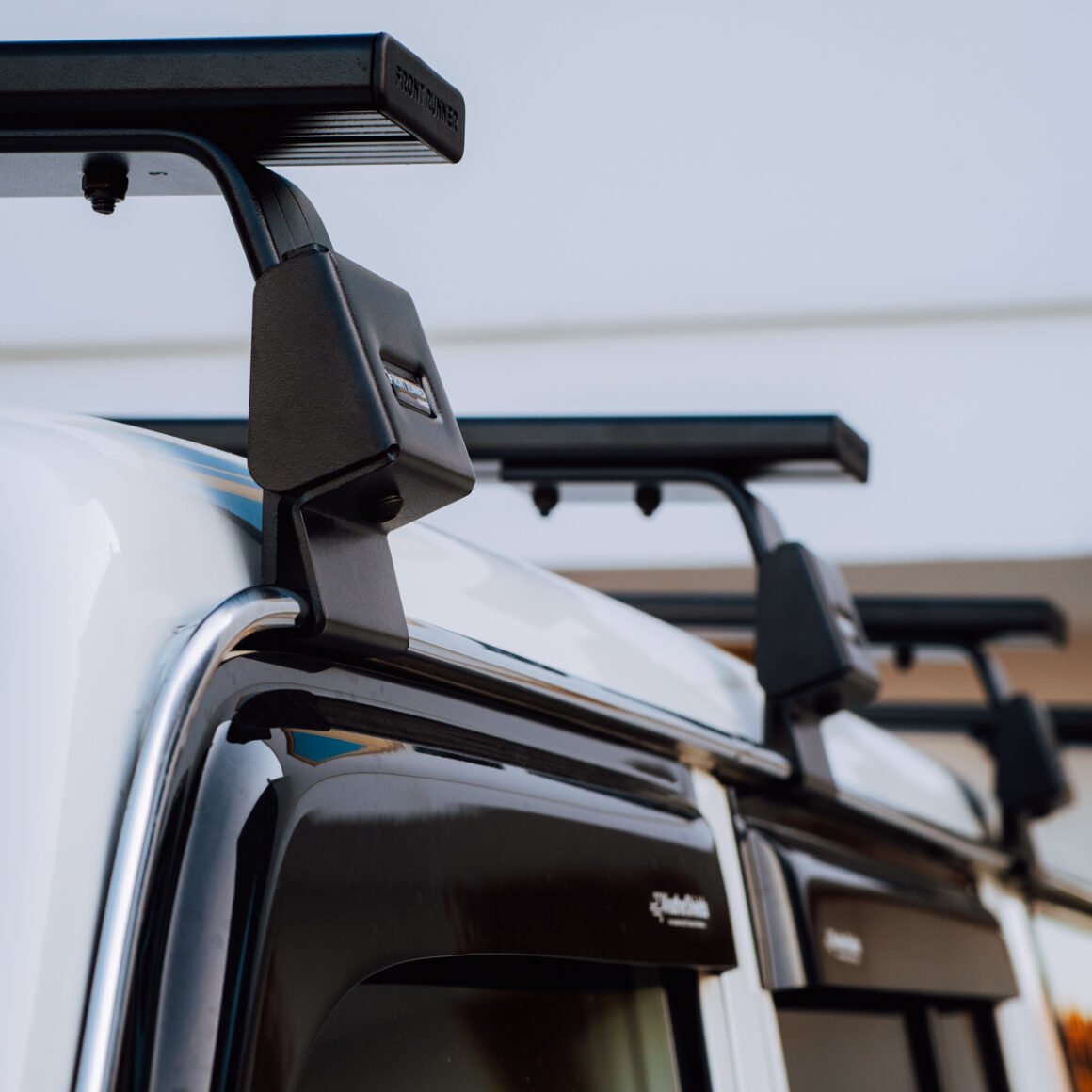
We kept the changes practical: a small suspension lift, all-terrain tyres on steel wheels, a roof rack, skid plates, an LED light bar and a new radio. You can read about every part in our post about our Suzuki Grand Vitara modifications.
FAQ
Is the Suzuki Grand Vitara 2 a good off-roader?
Yes, for its size and price. It has permanent four-wheel drive, a lockable centre differential and low range, and it took us much further than we expected. It is not a heavy-duty off-roader like a Land Cruiser or a Patrol.
Which engines did the Grand Vitara 2 have?
In Europe: 1.6, 2.0 and 2.4-litre petrols, a 3.2-litre V6 and a 1.9-litre diesel. Ours had the 2.0 petrol.
How much fuel does the Grand Vitara 2 use?
Our 2.0 petrol automatic used around 13 litres per 100 km in mixed driving.
Can you sleep inside a Suzuki Grand Vitara?
Only with a platform built over the folded seats, and it is tight. We always slept in a rooftop tent instead.
Final thoughts
The Grand Vitara 2 is one of the best ways to get into overlanding without spending a lot: simple, tough, capable and surprisingly comfortable. It was the perfect first car for us. Read why we sold it and what came next in our Land Cruiser 70 Series guide.