
Table of content
Choosing the GRJ76 was a decision rooted in the search for authenticity. In a world of disposable technology, the Land Cruiser 70 Series stands as an enduring all-terrain icon that has been in continuous production since 1984. It is a vehicle that values grit over glamour and capability over convenience. As we navigate the quiet corners of the world, from the mist-covered Blessington Lakes in Ireland to the rugged trails of the European interior, the Land Cruiser provides the reliability we need.
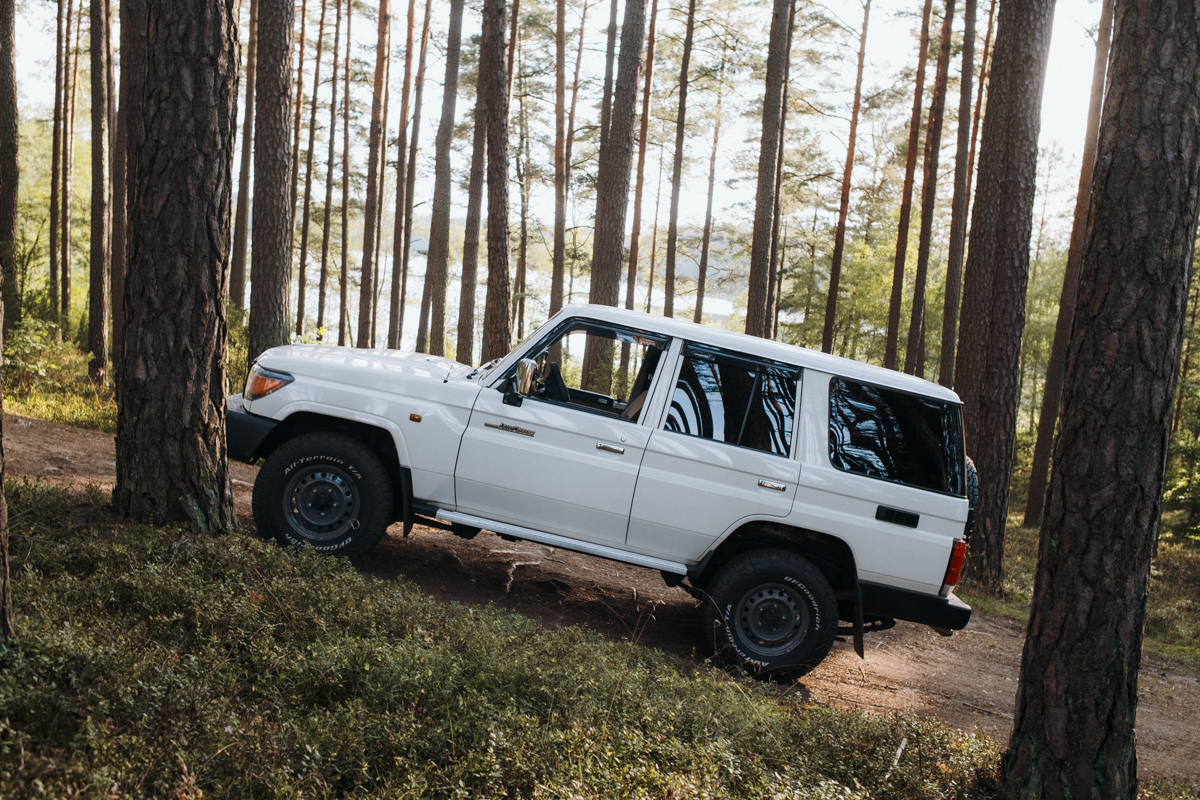
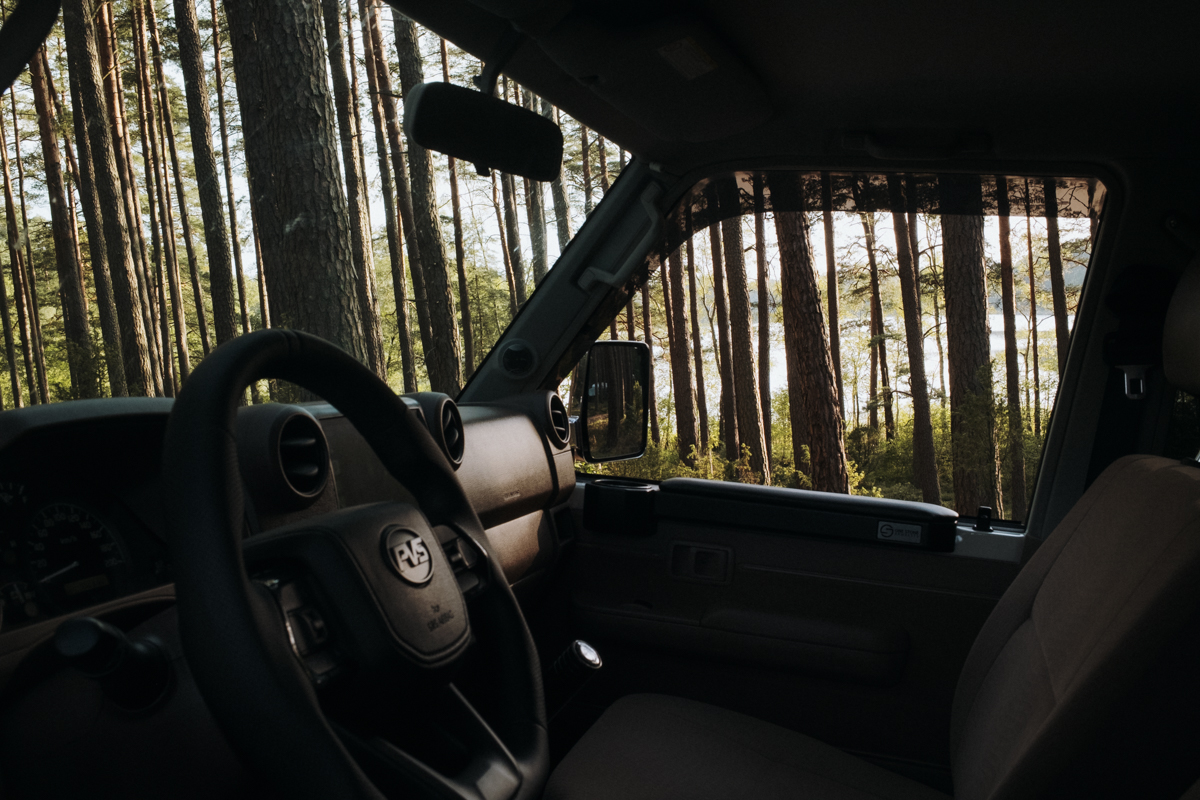
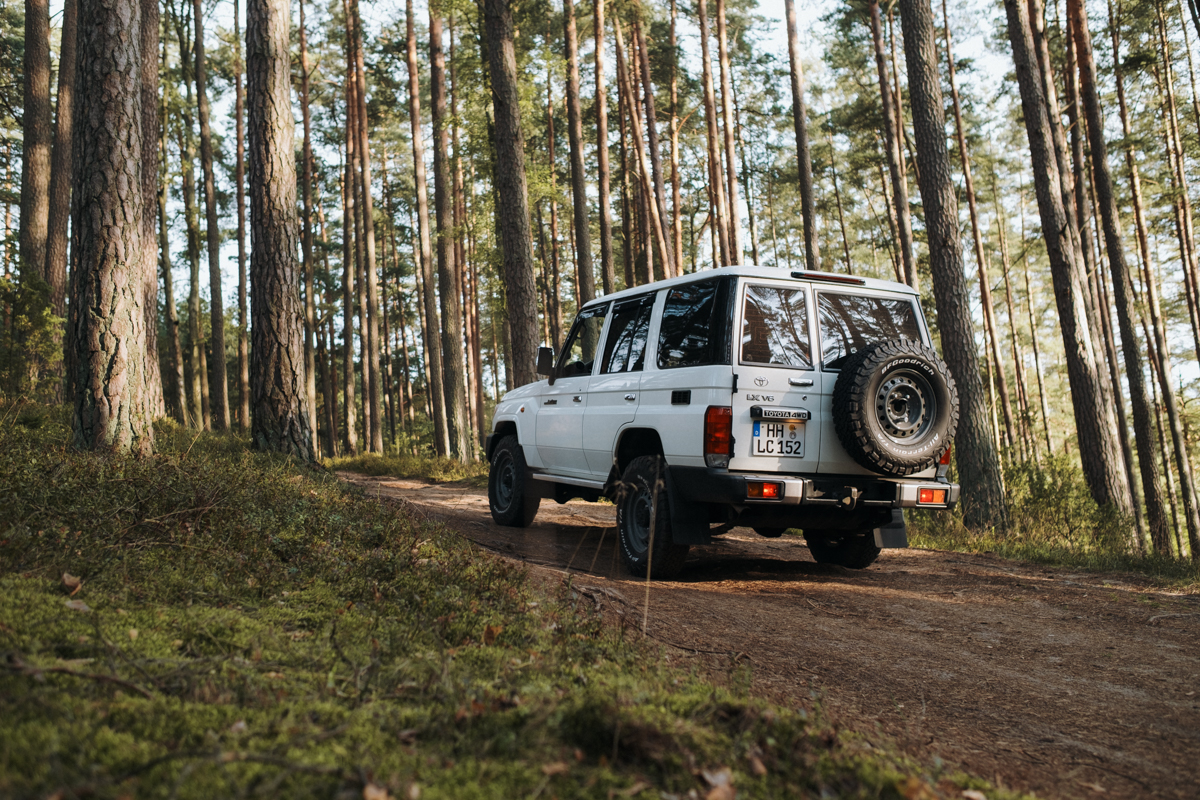
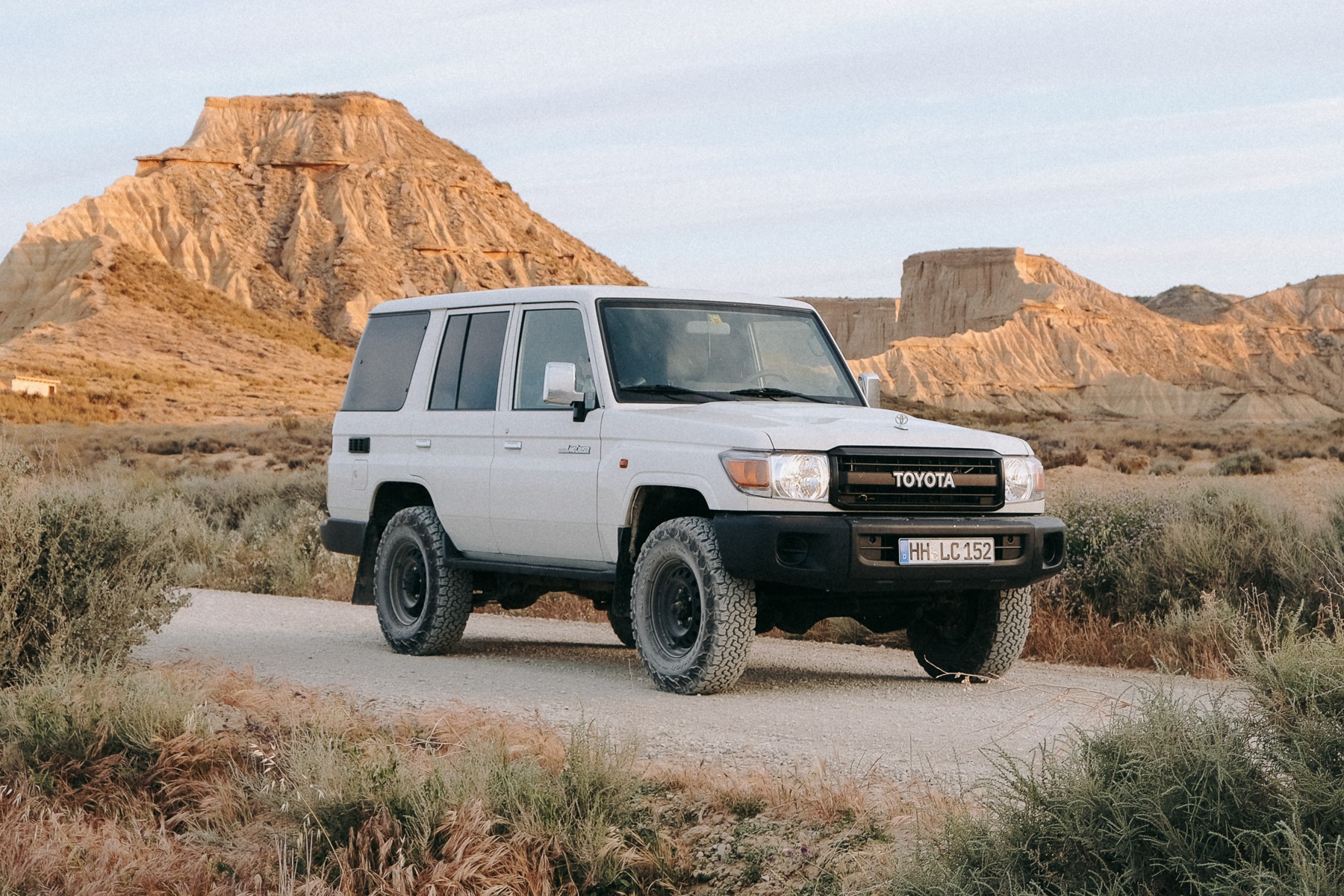
In an era increasingly defined by the silent hum of electric motors and the complex algorithms of hybrid drivetrains, finding a vehicle that speaks the language of the earth is a rare occurrence. The Toyota Land Cruiser GRJ76 is that rare mechanical soul. While it may roll off the modern factory line in Japan, its silhouette is a defiant echo of the 1990s, a time when cars were built to be understood by their owners and fixed by their drivers.
The Forty-Year Legacy of the 70 Series
The history of the Land Cruiser 70 Series is a chronicle of engineering stubbornness in the face of shifting trends. Introduced in 1984 as the replacement for the legendary 40 Series, the 70 Series was designed with a singular, clear purpose: to endure the unendurable. While the 40 Series had already established Toyota’s reputation for ruggedness, the 70 Series modernized the formula with a more angular silhouette and improved ergonomics, while retaining the heavy-duty DNA that allowed it to conquer the Australian Outback and the African savannas.


Throughout its decades-long lifespan, the 70 Series has been divided into two distinct lineages: the Heavy Duty and the Light Duty. The Light Duty models eventually morphed into the Land Cruiser Prado, moving toward passenger comfort and lifestyle appeal. However, the Heavy Duty line—which includes our GRJ76—stayed true to its commercial and expeditionary roots. It remains a vehicle of choice for mining operations, non-governmental organizations (NGOs), and military forces.
Technical Anatomy of the GRJ76 Wagon
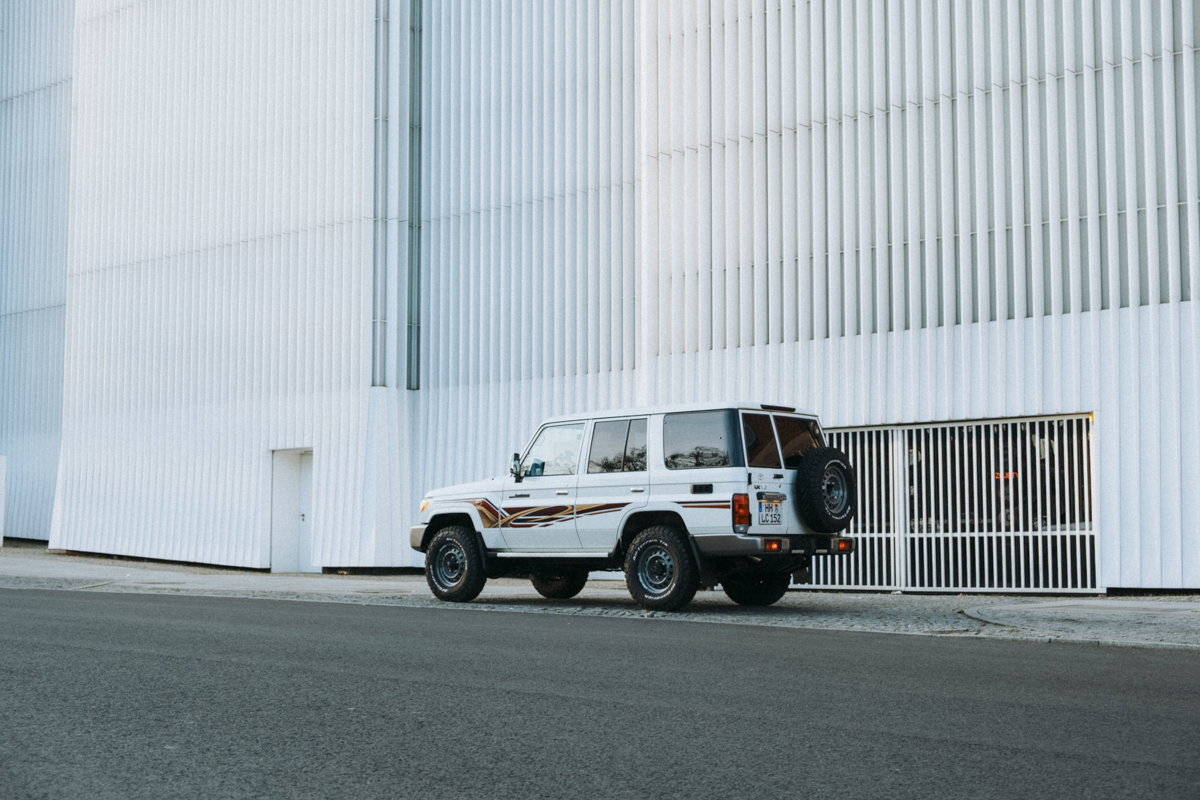
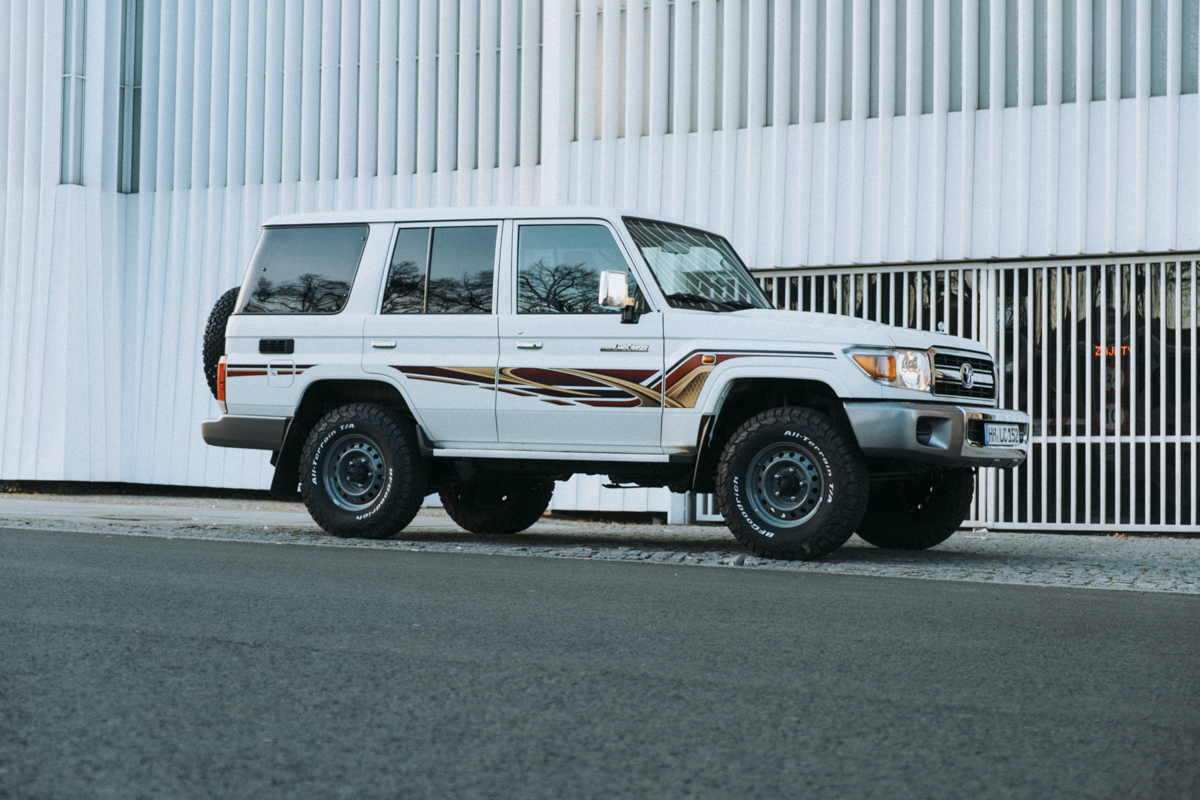
The Toyota Land Cruiser GRJ76 is built upon a sturdy steel ladder chassis. It is a design that provides immense structural integrity and the ability to absorb the stresses of heavy off-road use. For a family of three traveling with a full camping setup, the dimensions and weight capacities of the vehicle are critical factors in maintaining a safe and self-sufficient lifestyle on the road.
Measuring 4,730 mm in length and 1,770 mm in width, the GRJ76 occupies a unique footprint. It is narrow enough to navigate the tight, overgrown trails of a dense forest or the narrow streets of a historic coastal town like Dún Laoghaire, yet it offers enough interior volume to house our “home on wheels”. The vehicle’s height of 1,955 mm provides exceptional ground clearance and a commanding view of the terrain, which is essential when scouting for that perfect, silent campsite at the end of an unpaved road.
The Indestructible Heart: The 1GR-FE V6 Engine
At the center of our 2021 GRJ76 lies the 1GR-FE engine, a 4.0-liter V6 gasoline powerhouse that has earned a reputation for near-mythical reliability. As part of the Toyota GR engine family, the 1GR-FE was designed specifically for SUVs and trucks where durability and low-end torque are prioritized over high-revving performance. First appearing in 2002 in the 4Runner and Prado, it has since become the gold standard for petrol-powered Land Cruisers in demanding environments like the Middle East and South America.
The engine features an aluminum block with cast-iron cylinder liners, providing a lightweight yet robust construction. One of the most critical features for long-term overlanding is the use of a timing chain rather than a belt, which significantly reduces the maintenance burden and the risk of catastrophic engine failure in remote areas. The 2009 update introduced Dual VVT-i (Variable Valve Timing with intelligence) technology, which optimizes the timing for both intake and exhaust, resulting in a smoother power delivery and improved thermal efficiency.

Drivetrain and Chassis: The Mechanics of Control
The GRJ76 maintains a mechanical purity in its drivetrain that is nearly extinct in the 2020s. It features a robust 5-speed manual transmission, offering the driver total control over the vehicle’s power. In technical off-road situations, the ability to manually select gears and manage the clutch is an invaluable asset, allowing for the precise low-speed crawling required to protect both the vehicle and its passengers.
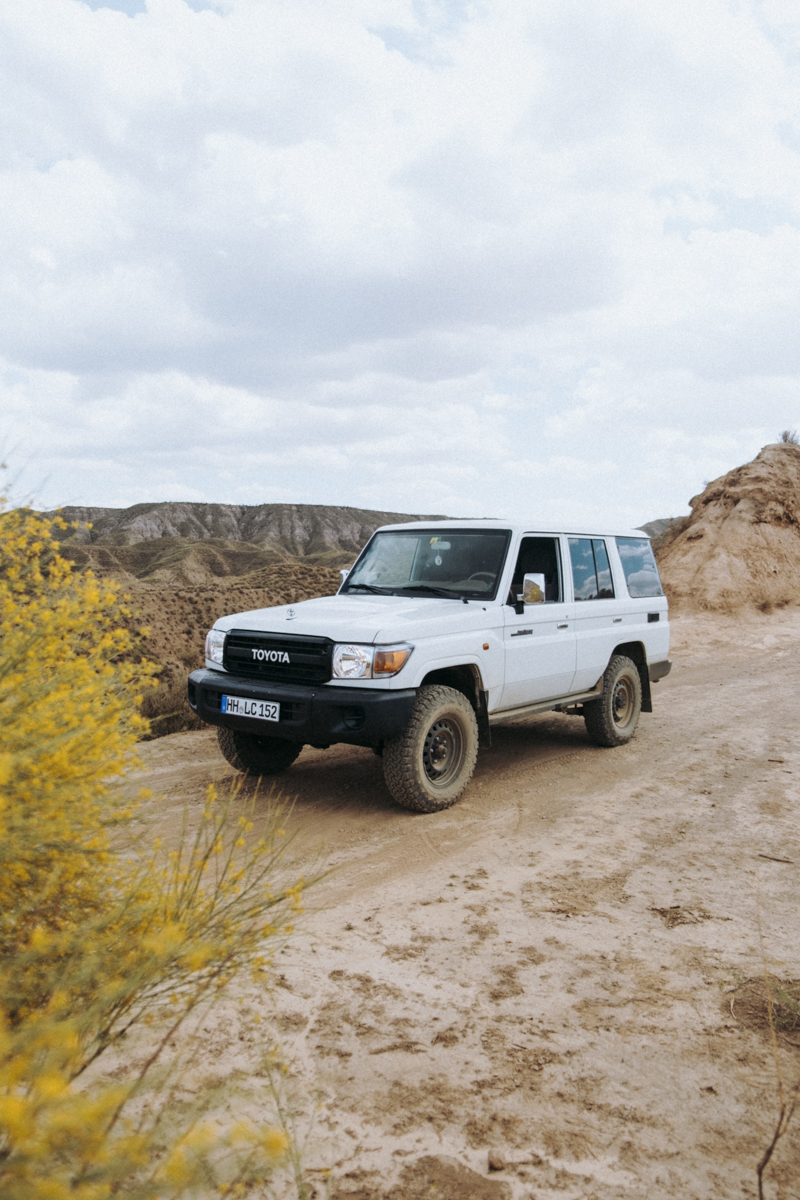
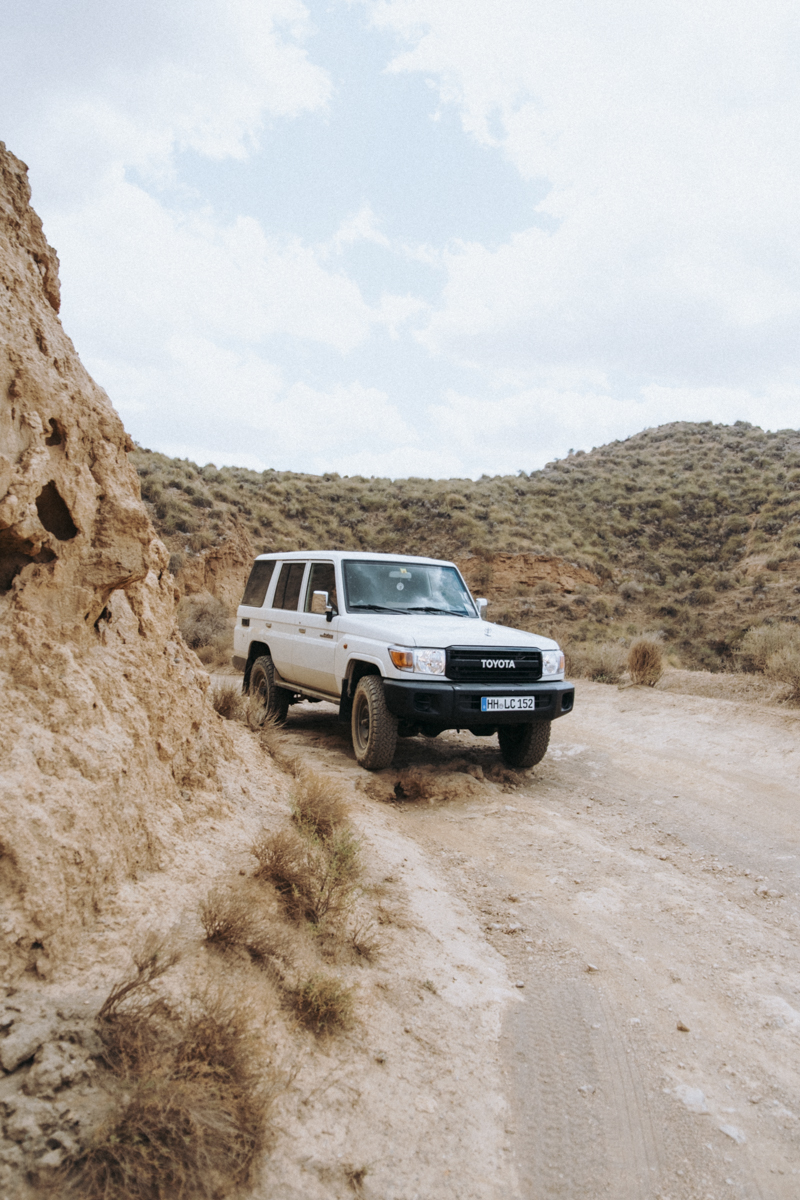
The vehicle utilizes a part-time 4WD system. In everyday driving on paved roads, it operates in permanent rear-wheel drive, which reduces wear on the front drivetrain components and improves efficiency. When the road ends and the unpaved stories begin, the driver can engage the four-wheel-drive system through the transfer case. This system includes both high-range and low-range gear ratios, providing the mechanical advantage needed to navigate deep sand, mud, or steep rocky inclines.


Suspension for Heavy Loads
True to its classic nature, the GRJ76 features a sturdy steel chassis with two solid (rigid) axles. The suspension setup is a deliberate hybrid of comfort and load-bearing strength.
- Front Suspension: Features coil springs and an anti-roll bar. This configuration allows for better wheel travel and a smoother ride on gravel roads compared to older leaf-spring models. It also incorporates an ABS system for safety during braking.
- Rear Suspension: Utilizes heavy-duty leaf springs. While some modern SUVs have moved to coils in the rear for comfort, the leaf spring remains the superior choice for a vehicle that carries a constant load of water, fuel, and camping gear.
This combination ensures that even when we are fully loaded for an extended expedition, the Land Cruiser navigates the terrain with confidence, without putting excessive strain on the chassis or compromising safety.
Industrial Resilience: Why the World Trusts the 70 Series
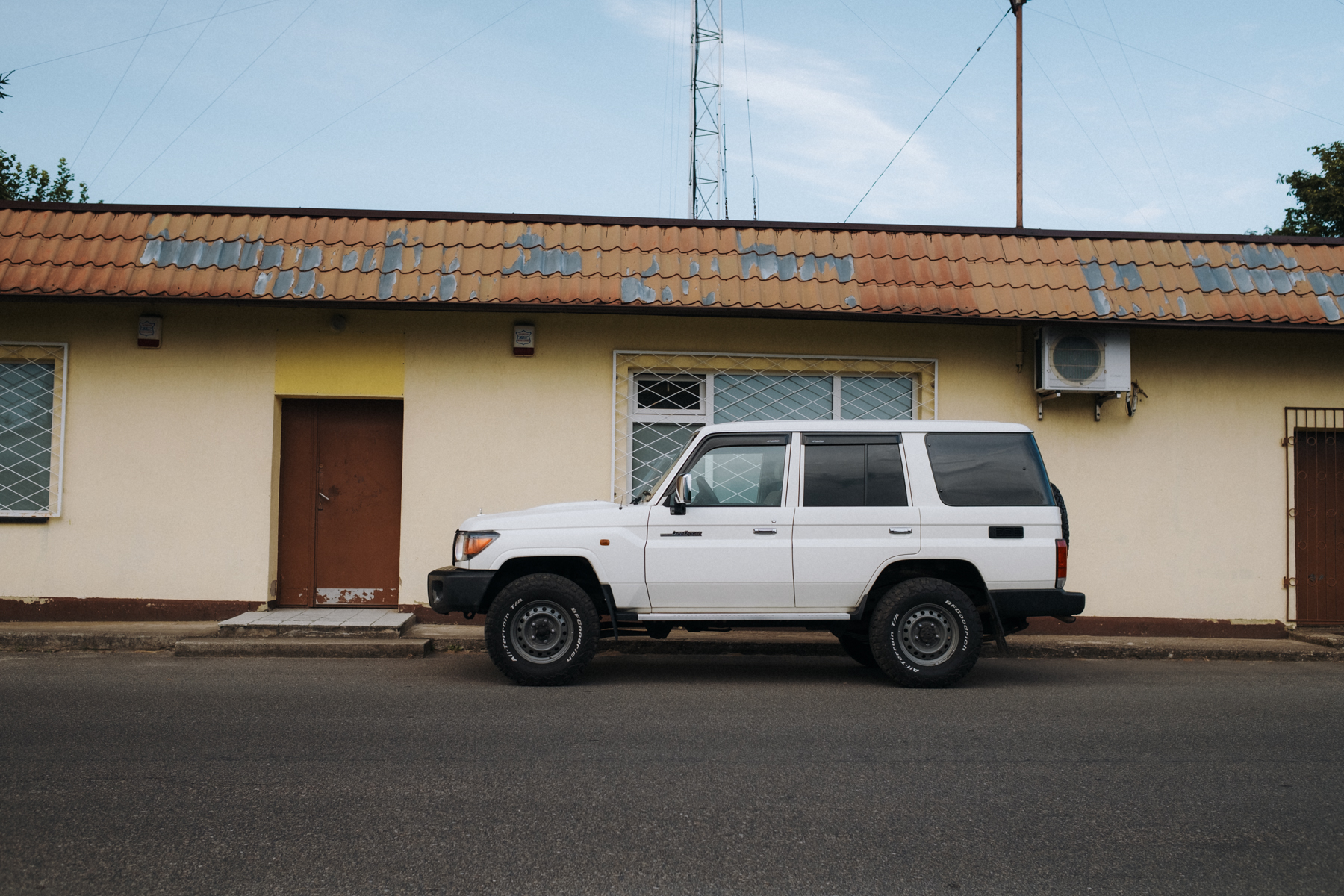
Similarly, the United Nations and various NGOs rely on the 70 Series (often referred to as the “Bush Taxi” in West Africa) for relief work in remote regions. Its “straightforward technology” and ease of repair mean that it can be kept running with basic tools in the most isolated corners of the globe.
The Future of the 70 Series: 2024 and Beyond
For those of us who prefer the gasoline 1GR-FE V6, the vehicle remains a “rare breed” in a world of planned obsolescence. It is a machine built to last a lifetime, and then some. Whether you are a DIY mechanic, a mining engineer, or an overlanding family, the Land Cruiser 70 Series offers a level of strength, simplicity, and trust that is increasingly hard to find.



Final Thoughts: The Soul of the Unpaved Road
In a world where most cars are becoming appliances, the GRJ76 remains an instrument of adventure. It demands that you engage with it, that you understand its mechanics, and that you respect the terrain it carries you across. For us, there is no greater joy than seeing the world through the upright windshield of this legend, knowing that no matter how rough the road becomes, the Land Cruiser will bring us home.
We invite you to join us on this journey—to look past the dust and find the micro-delights that make life extraordinary. Whether you are building your own rig or simply dreaming of the end of the unpaved road, remember that the world is vast, kind, and waiting to be discovered.