
Verdict
Good for: LC76 owners who want a rooftop tent on the roof and not much else.
Not for: anyone planning to run an awning or lights off the roof as well.
What we like: the width matches the tent, low weight, and a much lower price than a full rack.
What we don’t: no way to mount our awning or lights, a tight weight margin under a heavy tent, and the gutter mounts need rubber underneath.
Price paid: €385 per kit, €770 for two.
What you get in one kit
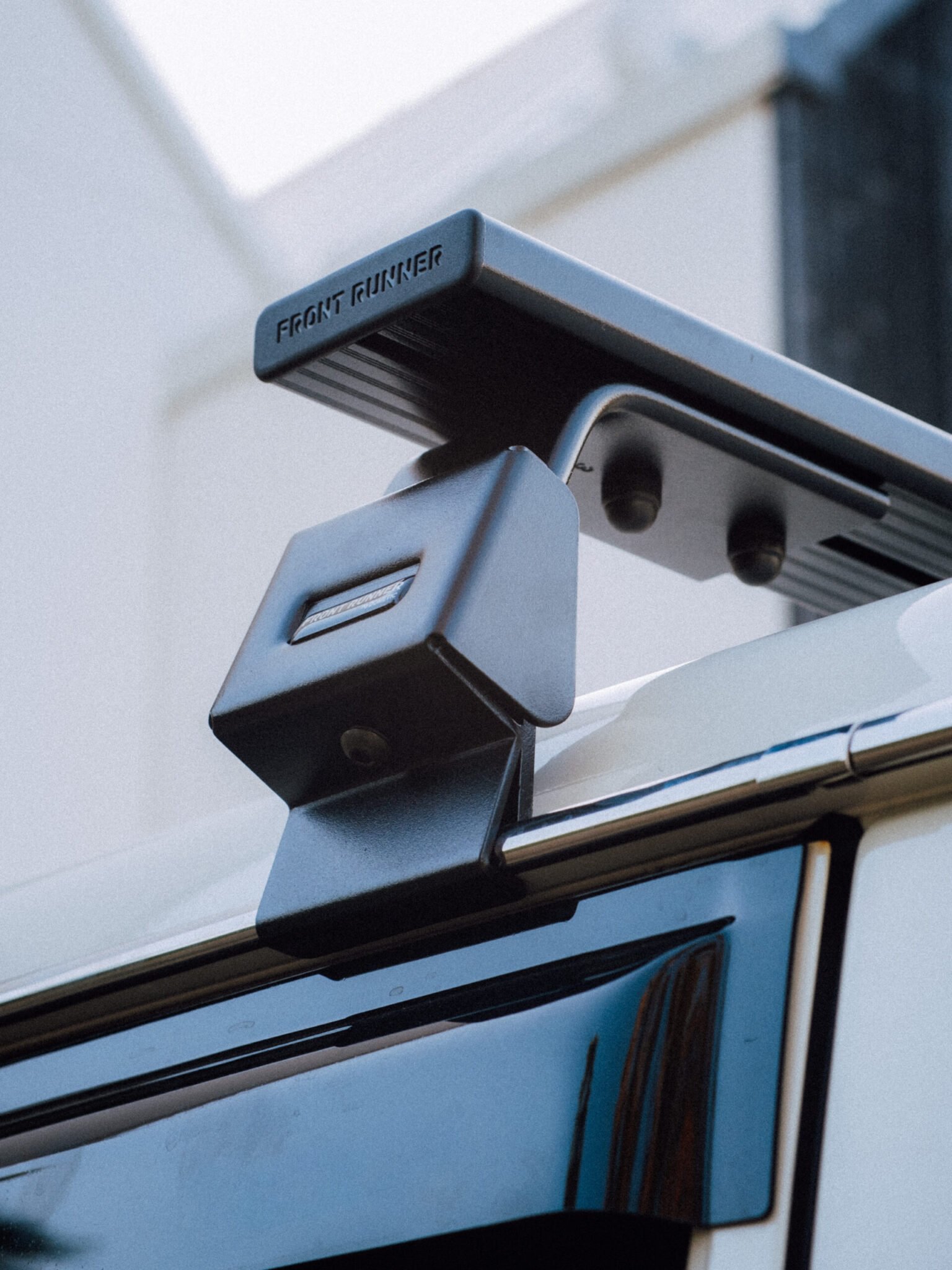
One kit (Front Runner code KRTL035) is a pair of load bars on gutter mounts. According to Front Runner, each kit includes two 1425 mm load bars, four 155 mm gutter mount legs, a wind deflector and all the hardware. The bars use the same aluminium slats as the Slimline II rack, with T-slots on top and bottom that take standard 8 mm bolts. Front Runner puts the installed weight at about 7 kg per kit. All of this is the maker’s data, not something we weighed ourselves.
Why load bars and not a full roof rack
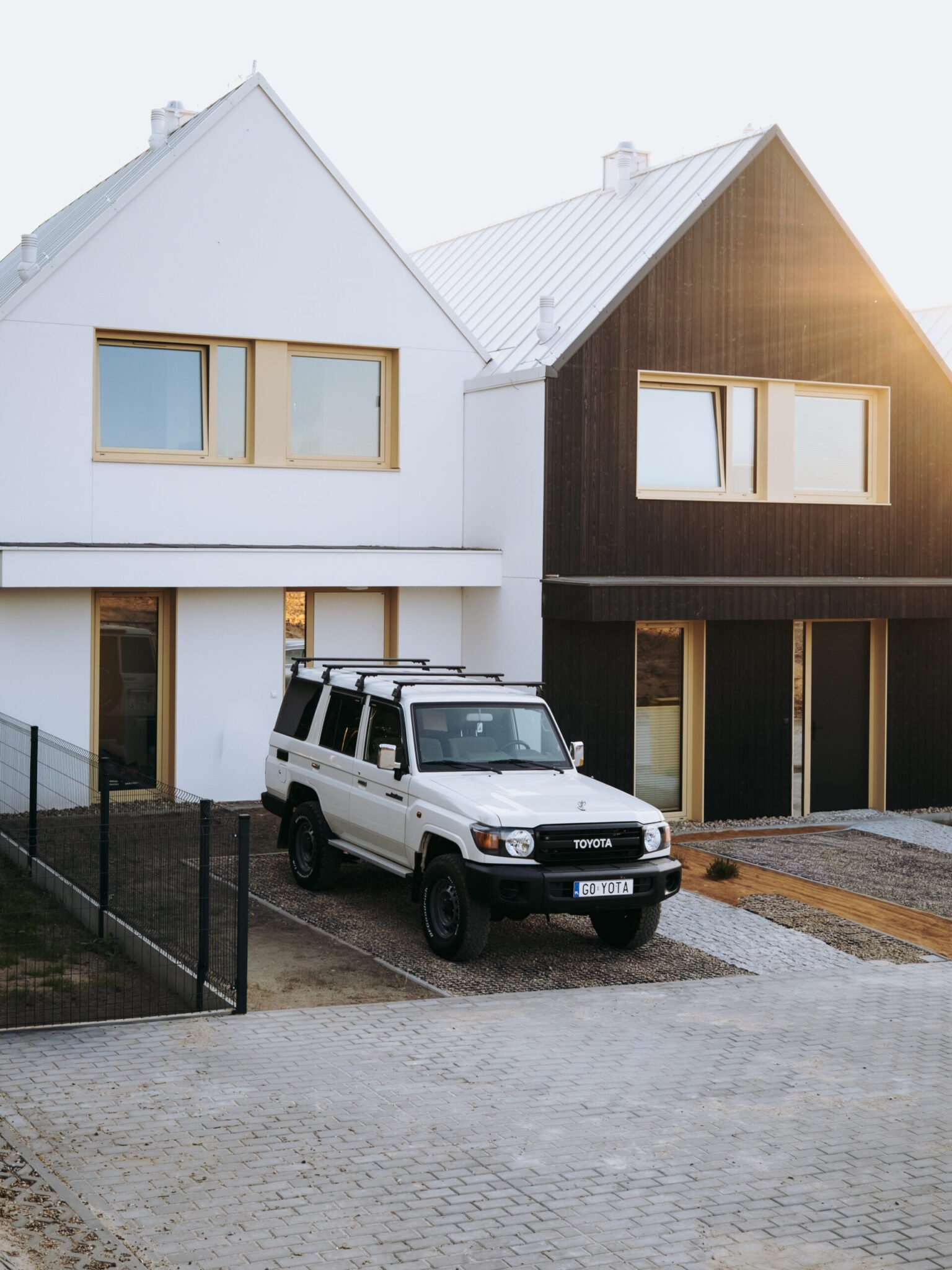
For us it came down to three things: width, weight and price. The bar width suits the tent almost perfectly, so the tent sits square on the roof without overhang tricks. The tent is the only thing we wanted up there, and a full rack would have added kilos and cost for space we would not use.
The trade-off is real though. Without a full rack we have nowhere to mount our awning or extra lights. We knew this going in, and it is still the one thing we miss.
Why four bars, not two
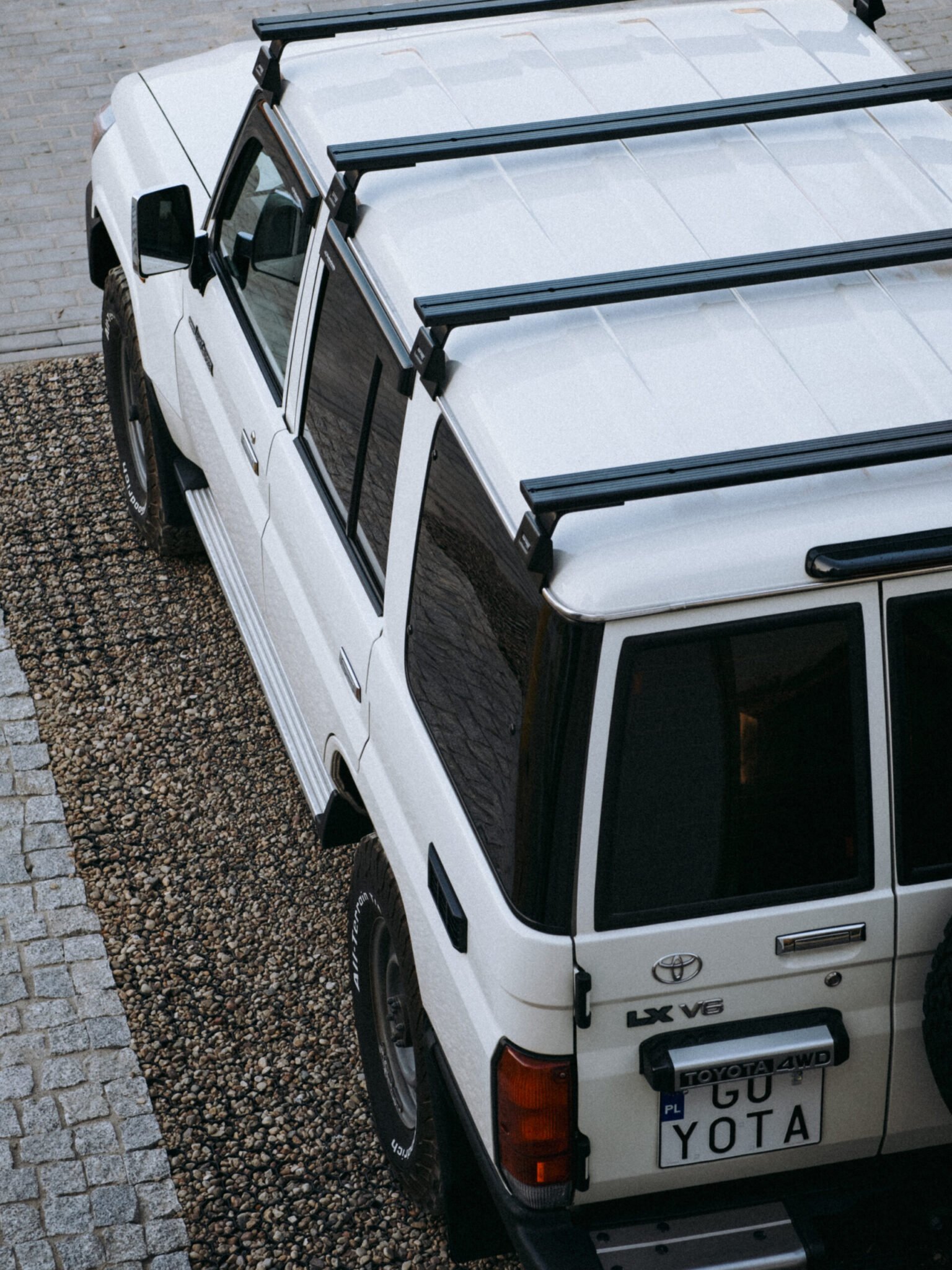
Two bars were never an option for this tent. Front Runner states that each load bar must not carry more than 25 kg, with the load spread evenly. The Hawk’s Nest V2 Wide weighs 88 kg according to Feldon. Two bars give you 50 kg, four give you 100 kg, which leaves a margin of 12 kg.
That margin is small, so the spacing matters. Front Runner does not publish a separate static rating for these bars, the figure that counts when people sleep inside. If you plan to copy our setup, it is worth asking your dealer about it first.
Fitting: one person, one hour
Fitting all four bars took one of us about an hour, alone. The spacing was set with a tape measure against the tent’s mounting points, nothing more sophisticated than that.
The one tip we would pass on: put a strip of rubber between the gutter mounts and the rain gutters. The gutters are the only thing holding the whole setup to the car, so protecting them from the clamps is worth the ten minutes.
By Front Runner’s numbers, the top of the bars sits about 177 mm above the gutters (22 mm bar plus 155 mm leg), which keeps the tent low on the roof.
10 nights in
So far, nothing to report, and that is exactly what we want from a part of the car we should never have to think about. After 10 nights with the tent up, the bars and mounts have given us no trouble.
The other thing we like is that the money is not wasted if our needs change. Front Runner says the bars and legs can later become part of a full Front Runner rack, so the awning problem has a way out.
FAQ
Do Front Runner load bars fit the Land Cruiser 76?
Yes, the KRTL035 kit is listed by Front Runner specifically for the LC76 and mounts to the rain gutters. We run it on our 2021 GRJ76.
Can two load bars carry a rooftop tent?
It depends on the tent. With a 25 kg limit per bar, two bars cover 50 kg, which is not enough for our 88 kg Hawk’s Nest V2 Wide, so we fitted four.
How long does fitting take?
About an hour for one person, including measuring the spacing. Add rubber under the gutter mounts to protect the gutters.
Can you mount an awning to load bars?
Not on our setup. That is the main thing we gave up by choosing bars over a full rack.
Final thoughts
Four plain bars on the roof are not the most exciting part of an overland build, but they are what lets the tent come with us, and the fewer things we need to check on the roof, the more time we spend looking past the dust at where we are. If you want to see the setup on the road, we post most of our trips on Instagram.