At a glance
Good for: anyone who wants to sleep wherever their car can go, off the ground and set up in minutes.
Not for: cars with a low roof load, or anyone who often stays several days in one sunny spot.
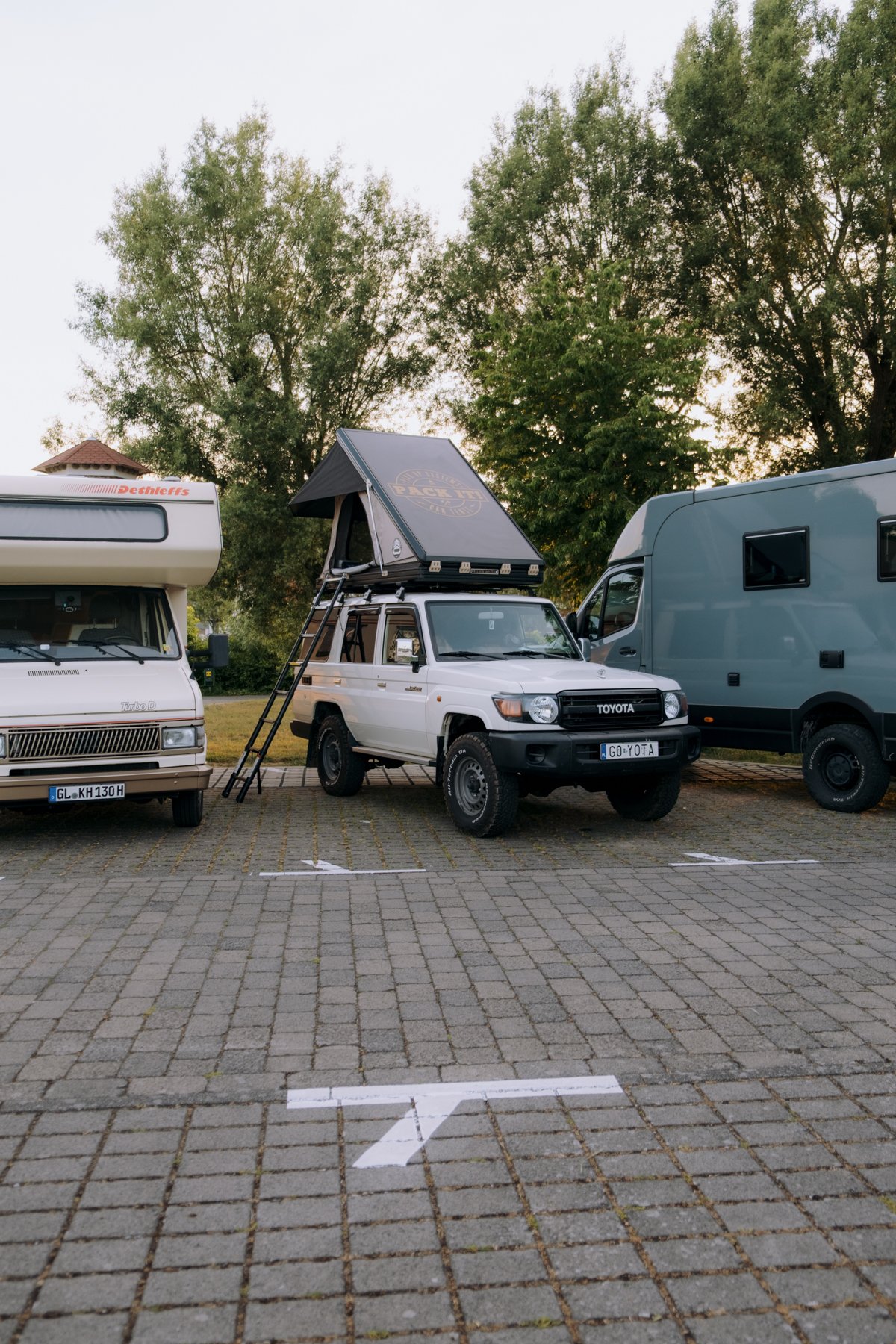
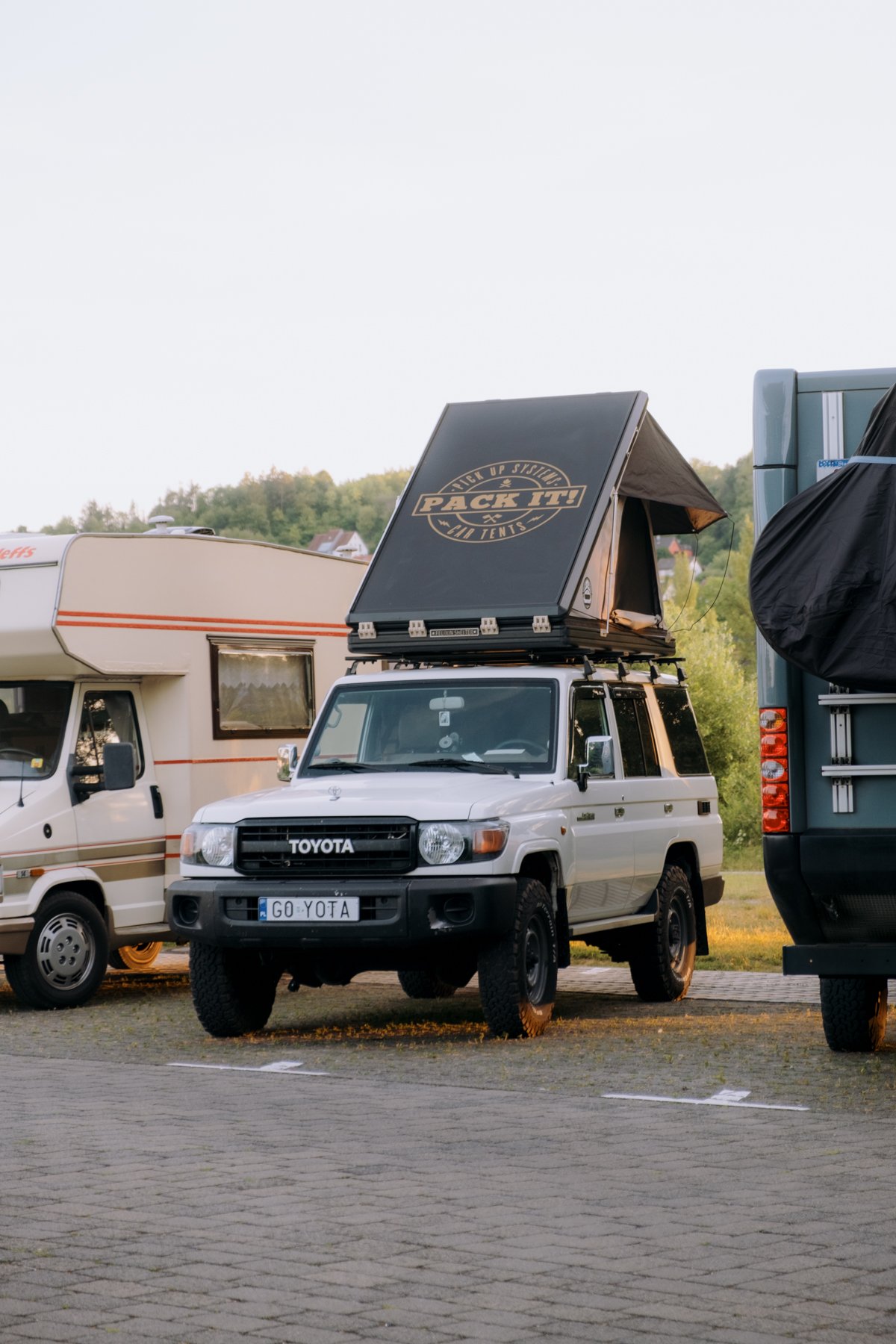
What we have used: a soft-shell Front Runner Feather-Lite on a Suzuki Grand Vitara for two years, a bed inside our Land Cruiser in 2023, and now a hard-shell Feldon Shelter Hawk's Nest V2 Wide on our Land Cruiser 76.
Our verdict: there is no best tent. It all depends on your car and how you travel.
Disclosure: the Feather-Lite came from a collaboration with Front Runner, and the Hawk's Nest through a barter partnership with PACK IT.
Updated: October 2026.
How we got into rooftop tents
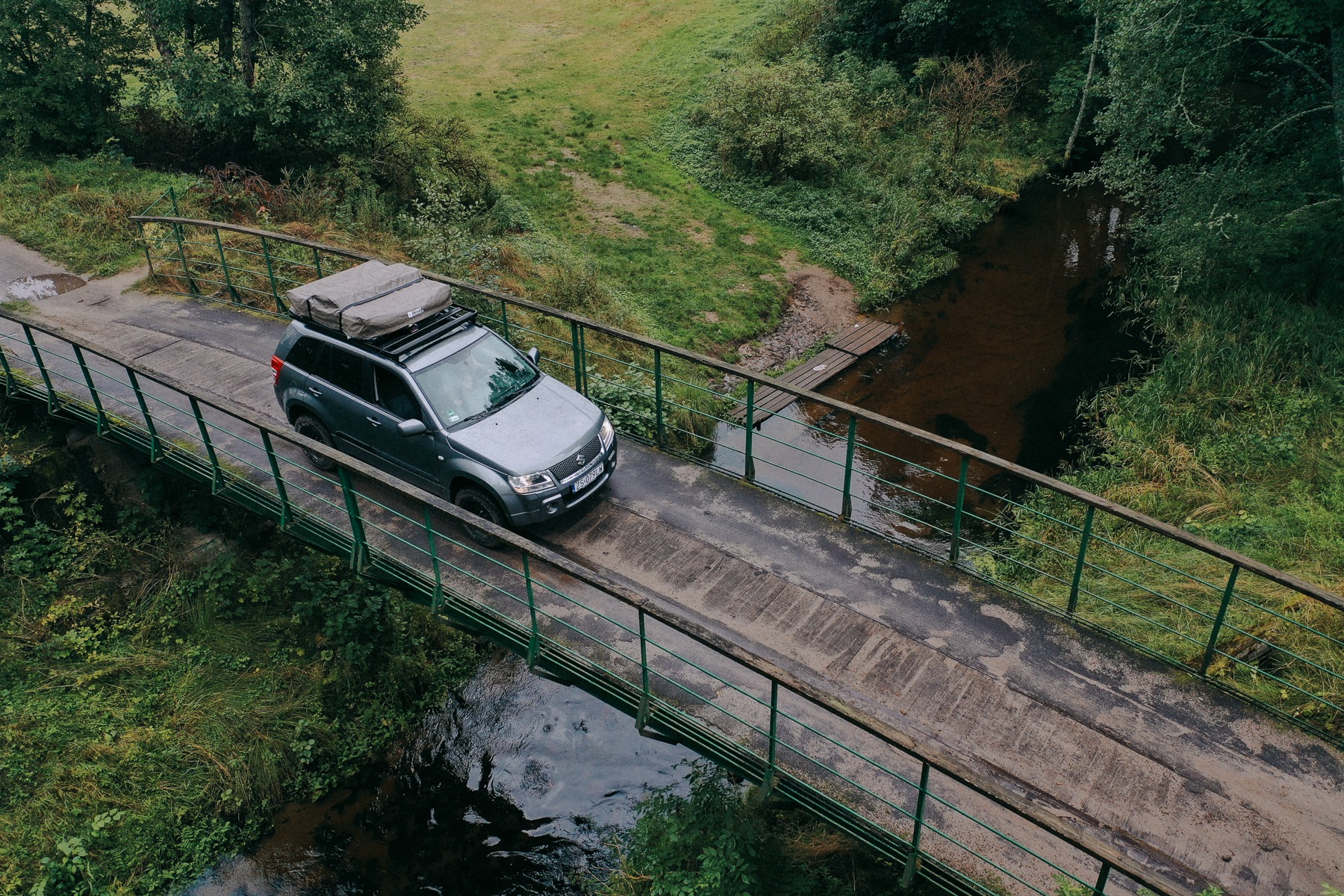
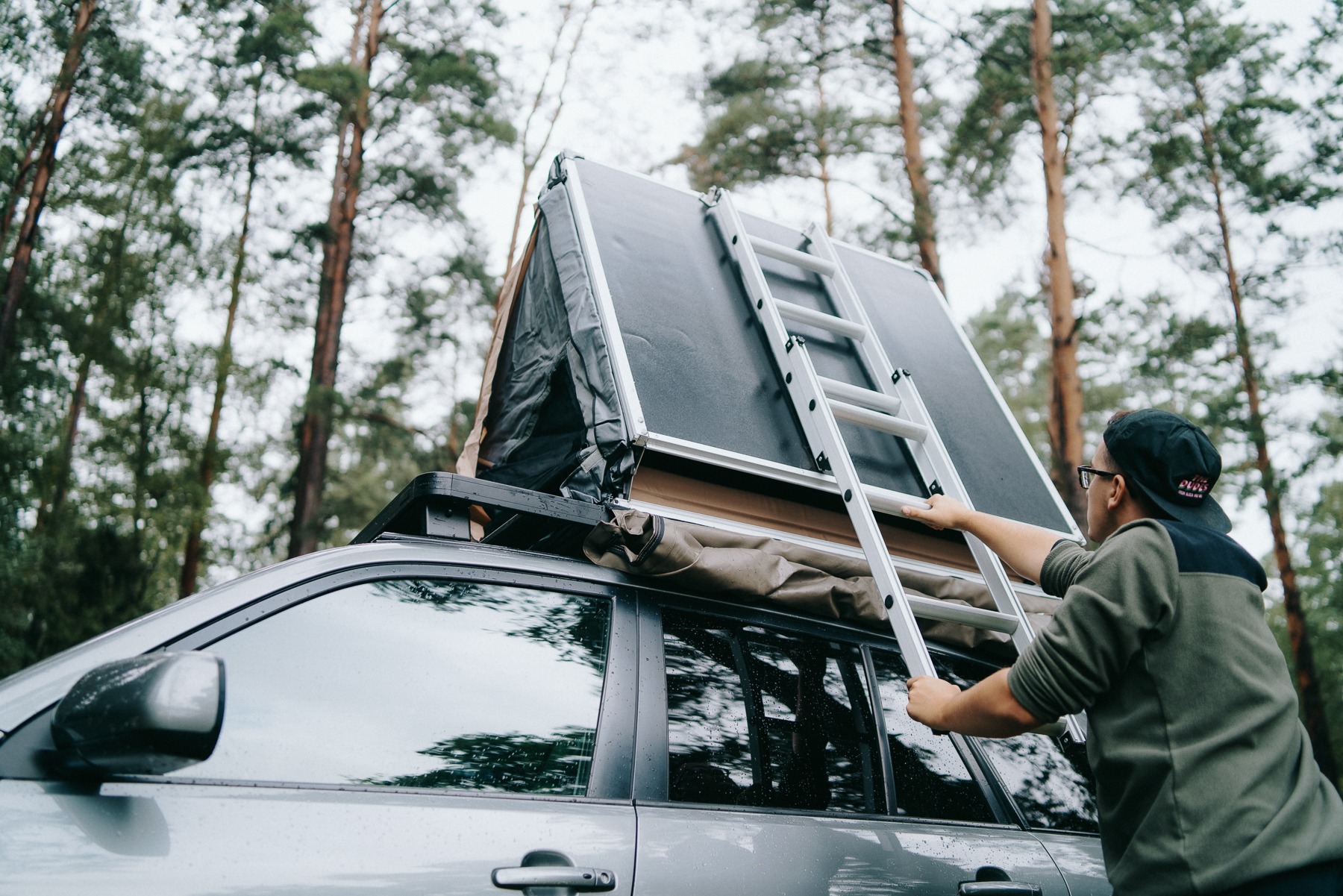
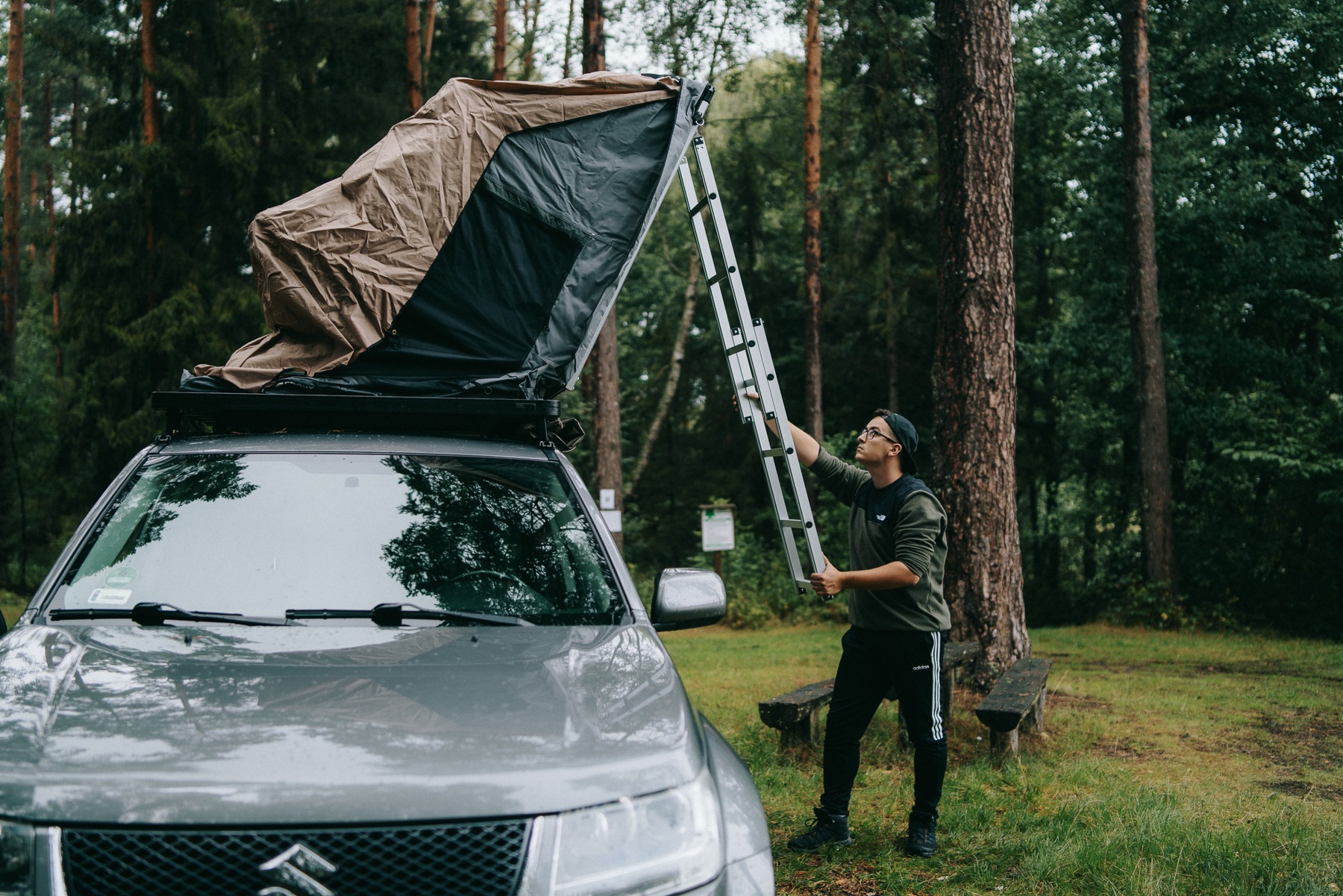
Our love for overlanding started well before the pandemic, when we began modifying our Suzuki Grand Vitara and taking it further off the beaten track. Seeing rooftop tents on travellers' cars and on social media got us curious, and when we started working with Front Runner, the choice was easy. We already had their roof rack, so we went for the Front Runner Feather-Lite: affordable, very light and one of the flattest tents on the market.
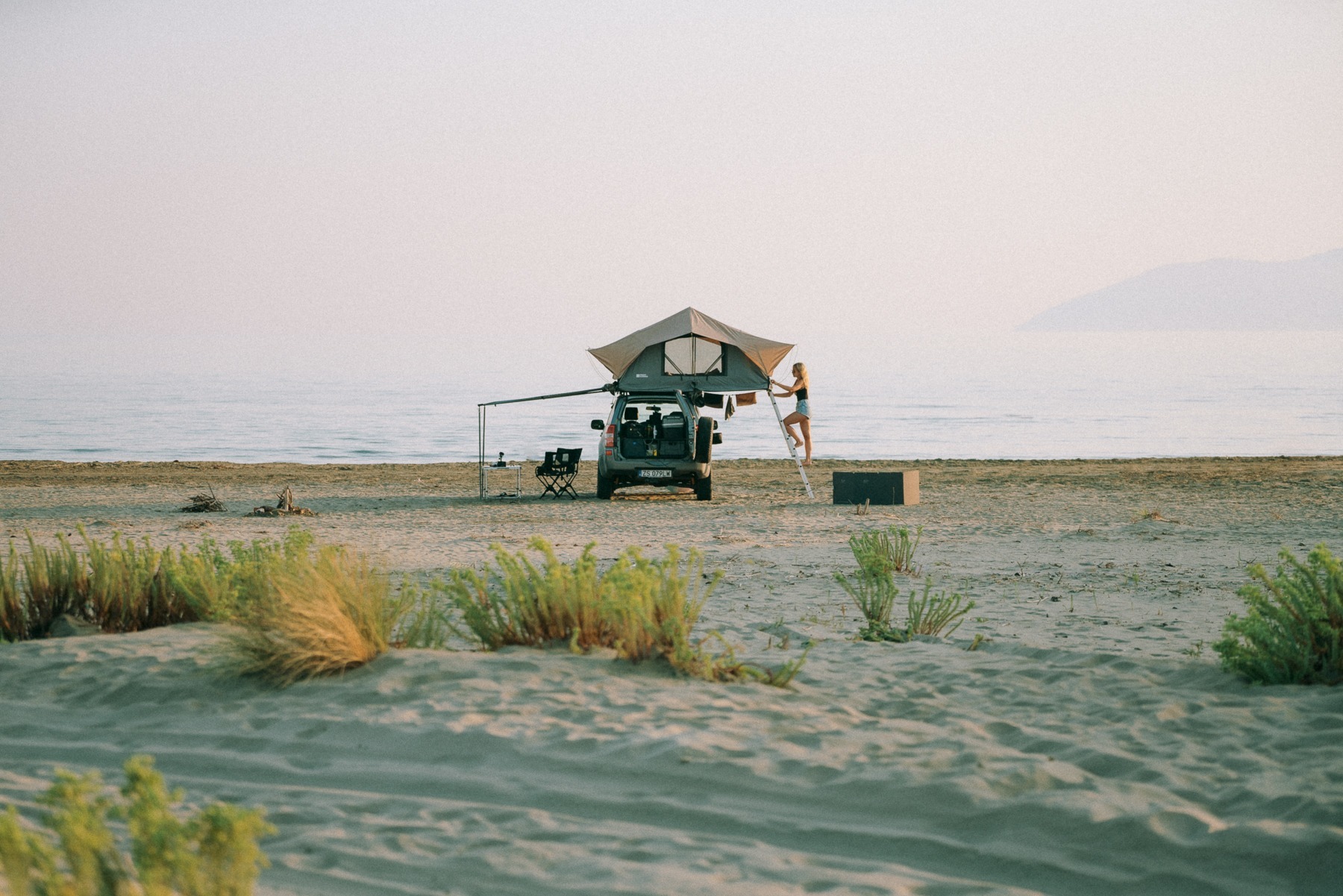
The first season was all about learning. Where to park, which way to open the tent, how to set it up and pack it away fast, and what to do when the weather turns. In 2021 it was our home on a 5,000 km road trip to Albania, through Croatia, Bosnia and Herzegovina and Montenegro.
The night the wind won
Wind is the biggest enemy of a rooftop tent, and we learned that the hard way. We were at a campsite on the Croatian coast on a calm, warm evening when a Polish couple walking past warned us that a storm might come at night. We had handled some wind before, so we ignored them.
We woke up in the dark to the sound of fabric flapping so hard that we could not stay inside, so we moved to the front seats of the car. Not long after, a strong gust broke part of the tent's frame.
What we do since then: we check the forecast in a weather app every day, and before we settle anywhere, wild or at a campsite, we get out of the car and look at the wind, the trees around us and how exposed the spot is. A hard-shell tent copes with wind much better, but even then you need to be careful.
Sun, heat and trees
Heat is the other problem. On the Balkan trip we drove for days in more than 30 degrees, with the sun setting late. When we arrived at camp and opened the tent, it was a sauna inside. A rooftop tent also heats up fast if you stay in one sunny spot for several days.
Parking under a tree for shade sounds smart, but on one trip resin from the tree damaged the outer layer of our tent. A rooftop tent works best when you move every day. If you plan to stay put in the heat, a classic ground tent in the shade of the car or an awning can be the better choice.
Soft shell or hard shell: our honest comparison
Our soft-shell Feather-Lite was incredibly light and small, at just 43 kg and around 20 cm high when closed, and perfect for a small car. But it was not stable, and the wind showed us that.
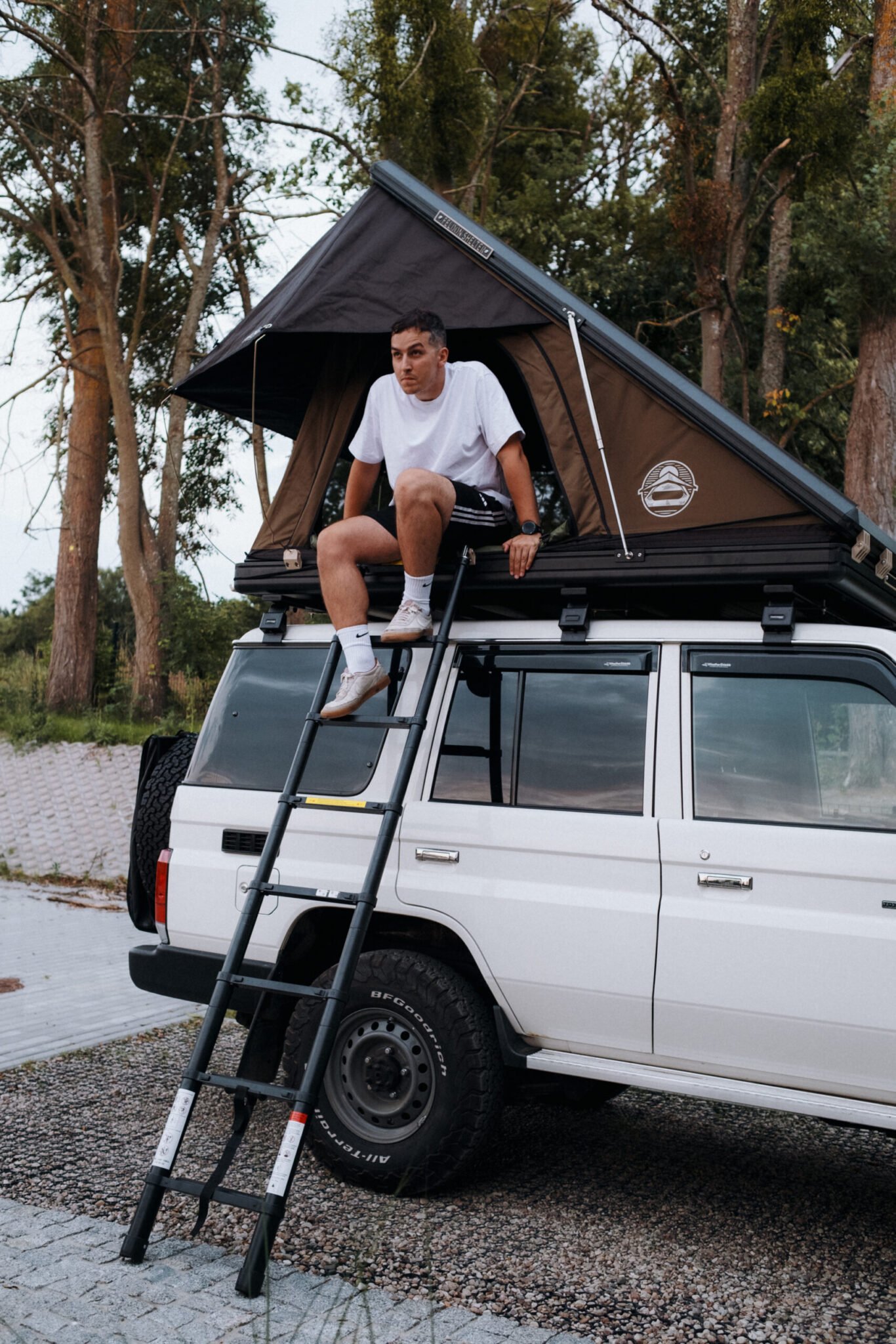
Our hard-shell Feldon Shelter Hawk's Nest V2 Wide is a different world. It is great in wind and rain, although you still need to be careful, and the bed is ready in about a minute. The three of us sleep in it, including our son. A hard shell is also less prone to scratches. The price for all that: it weighs 88 kg and costs much more.
So which is better? It depends on your car and how you travel. A light soft shell makes sense on a smaller car and a tighter budget. A hard shell pays off if your car and roof can carry it and you travel often, in any weather.
Or sleep inside the car?
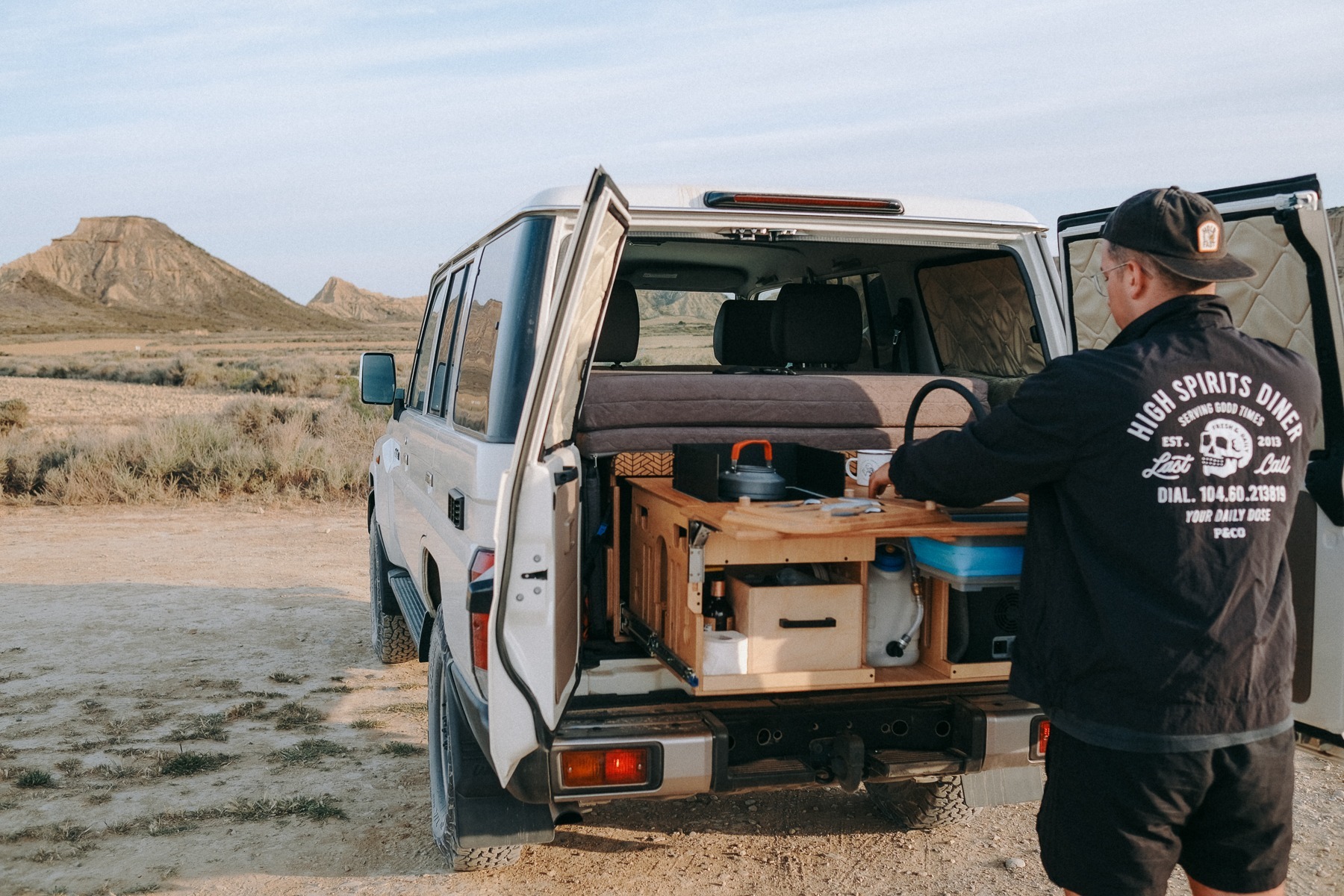
In 2023 we tried the third way: no tent at all. With the Land Box Premium by Escape Vans in the back of our Land Cruiser, we had a kitchen, a fridge, water and a bed inside the car, and building the bed took about three minutes. It is a good option if you want to stay hidden, sleep in bad weather without going outside, or keep weight off the roof. We have since sold it and moved back to the roof.
Check your roof load before you buy
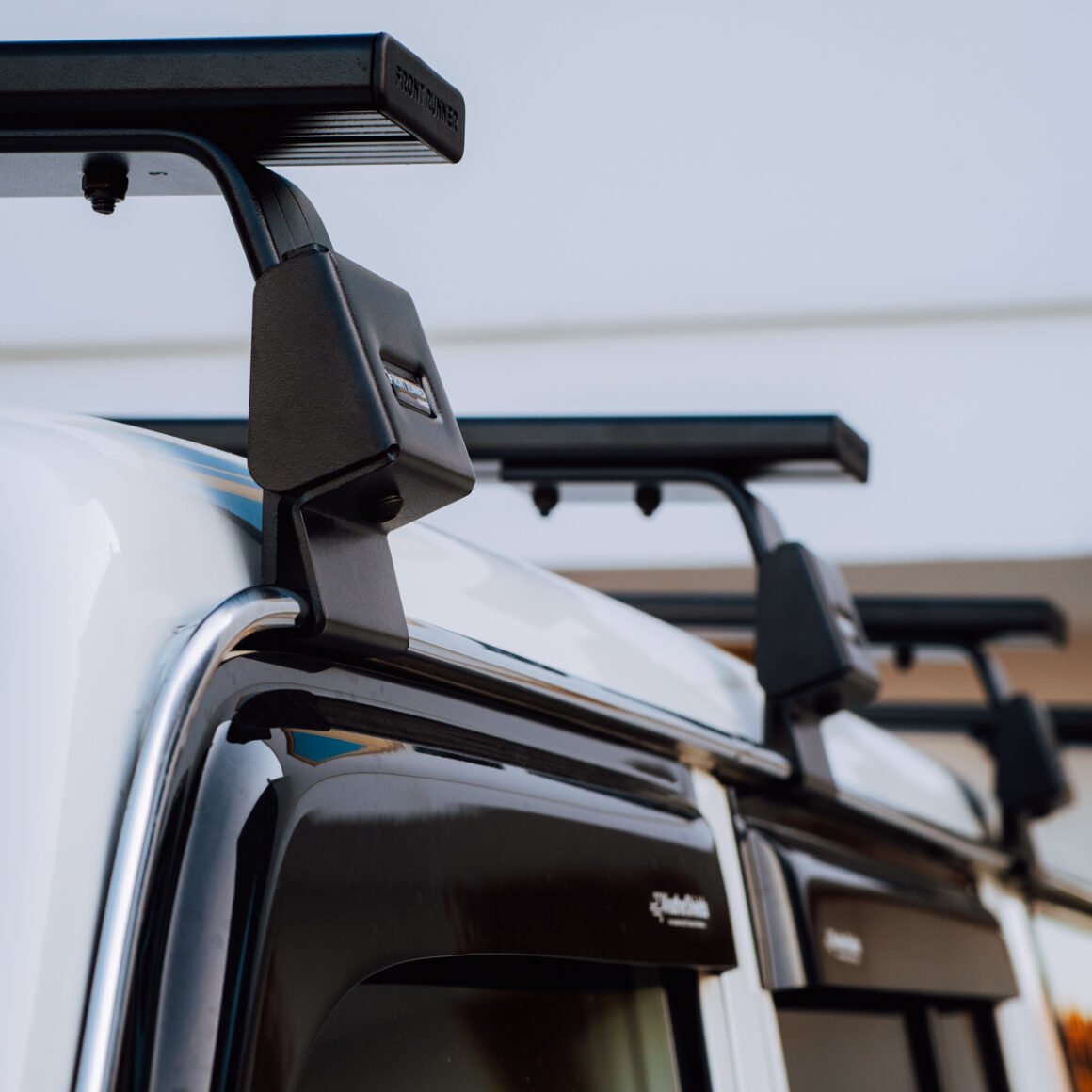
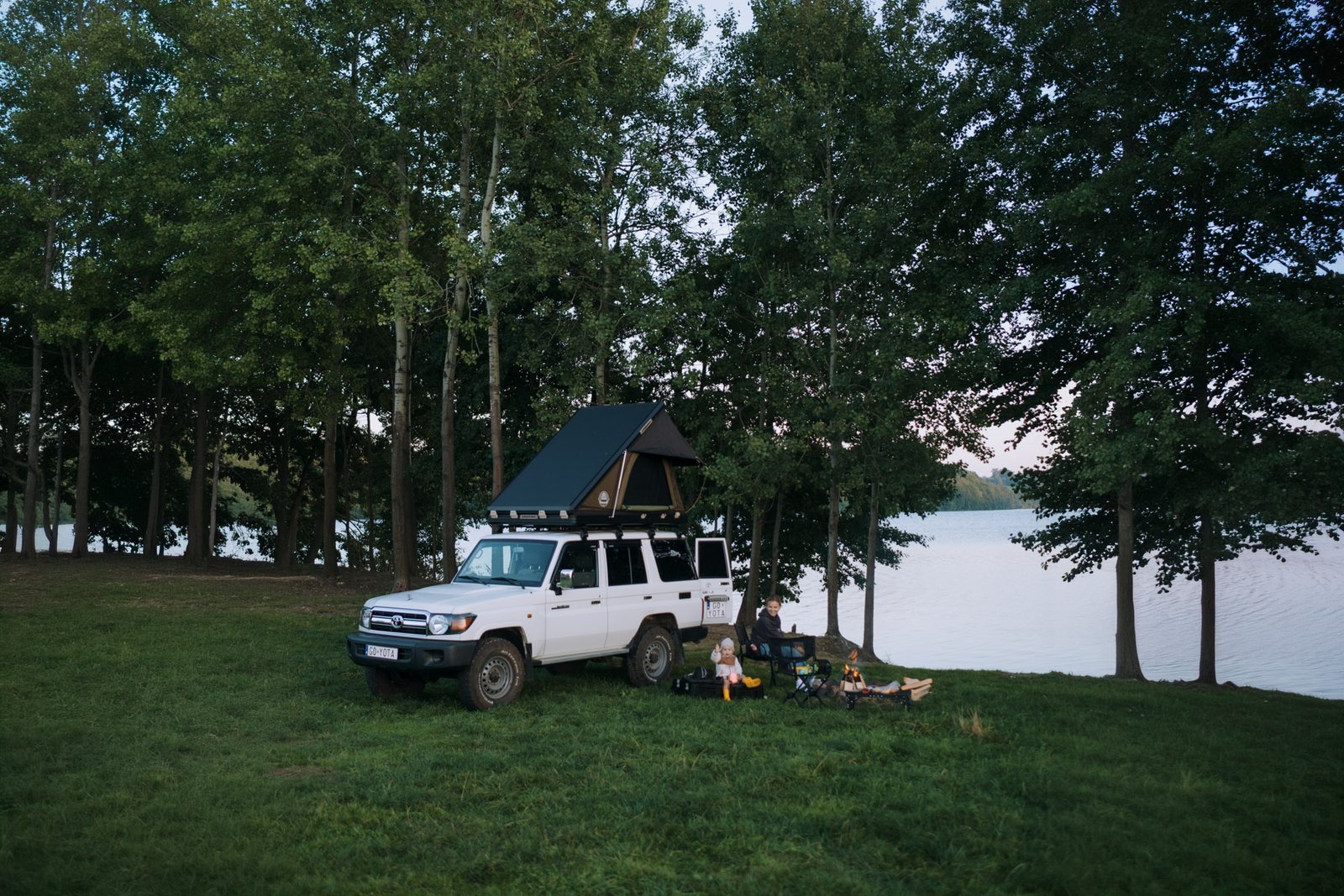
Before you fall for a tent, check what your car and your rack can carry. Manufacturers give a dynamic roof load, the weight allowed while driving, and that is the number the tent has to fit within. Parked, the roof can hold much more, which is why two or three people can sleep up there. Our Hawk's Nest Wide weighs 88 kg, and its maker requires a car and rack rated for at least 100 kg dynamic load, so we mounted it on Front Runner load bars. The light Feather-Lite was no problem on the Suzuki.
How to choose a rooftop tent
Your car. Start with the roof load, the height of the car with the tent on top, and whether it will still fit in your garage or car park.
How you travel. If you move every day, a rooftop tent is brilliant. If you stay in one place for days, think about heat and a ground tent.
Who sleeps in it. Two people fit in most tents. With a child, look at a wider model, like our Hawk's Nest Wide.
Weather. If you often face wind and rain, a hard shell is worth the extra money and weight.
Budget. Soft shells start at around 1,200 euros, like the new Feather-Lite II. Premium hard shells cost much more: our Hawk's Nest Wide lists at 16,800 PLN.
Try before you buy. Fairs like Abenteuer & Allrad are a great place to climb into different tents. We tested a Standard Hawk's Nest there before getting ours.
FAQ
Is a soft-shell or hard-shell rooftop tent better?
It depends on your car and how you travel. Soft shells are lighter and cheaper. Hard shells cope better with wind and rain, scratch less and open faster, but they are heavier and more expensive.
How much does a rooftop tent weigh?
Ours ranged from 43 kg for the soft-shell Front Runner Feather-Lite to 88 kg for the hard-shell Hawk's Nest V2 Wide.
Can a family sleep in a rooftop tent?
Yes. The three of us, including our son, sleep in our Hawk's Nest V2 Wide.
Are rooftop tents safe in strong wind?
A hard shell handles wind much better, but you still need to be careful. Check the forecast and choose a sheltered spot. Our soft-shell tent was damaged by a gust in Croatia.
Do rooftop tents get hot?
Yes, especially in the sun. Ours turned into a sauna in the Balkans in summer. Rooftop tents work best when you move every day.
Final thoughts
After a light soft shell, a bed inside the car and now a hard shell, our answer to "is a rooftop tent worth it?" is still: it depends. On your car, on how you travel and on the weather you expect. Get that right and a rooftop tent gives you something nothing else does: a bed anywhere your car can go.
Read our full reviews of the Front Runner Feather-Lite and the Feldon Shelter Hawk's Nest V2 Wide.