At a glance
Good for: anyone with a 4x4 or a high-clearance car who wants a real desert landscape without leaving Europe.
Not for: low cars after heavy rain, or midday in midsummer, when temperatures can reach 45°C.
Getting there: the A-92 between Granada and Baza, then the GR-6100 down to Gorafe.
Time needed: one full day, which is what we had.
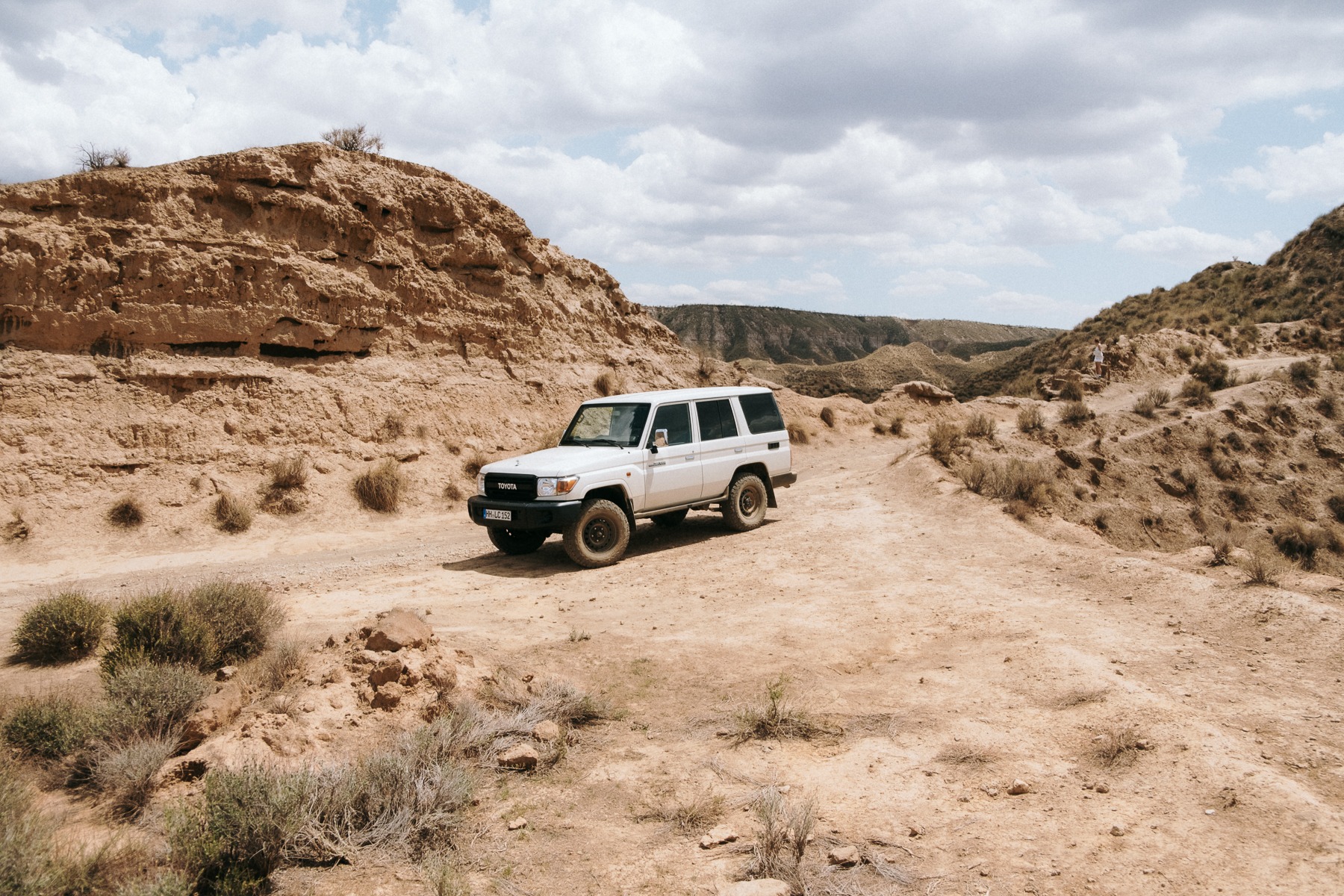
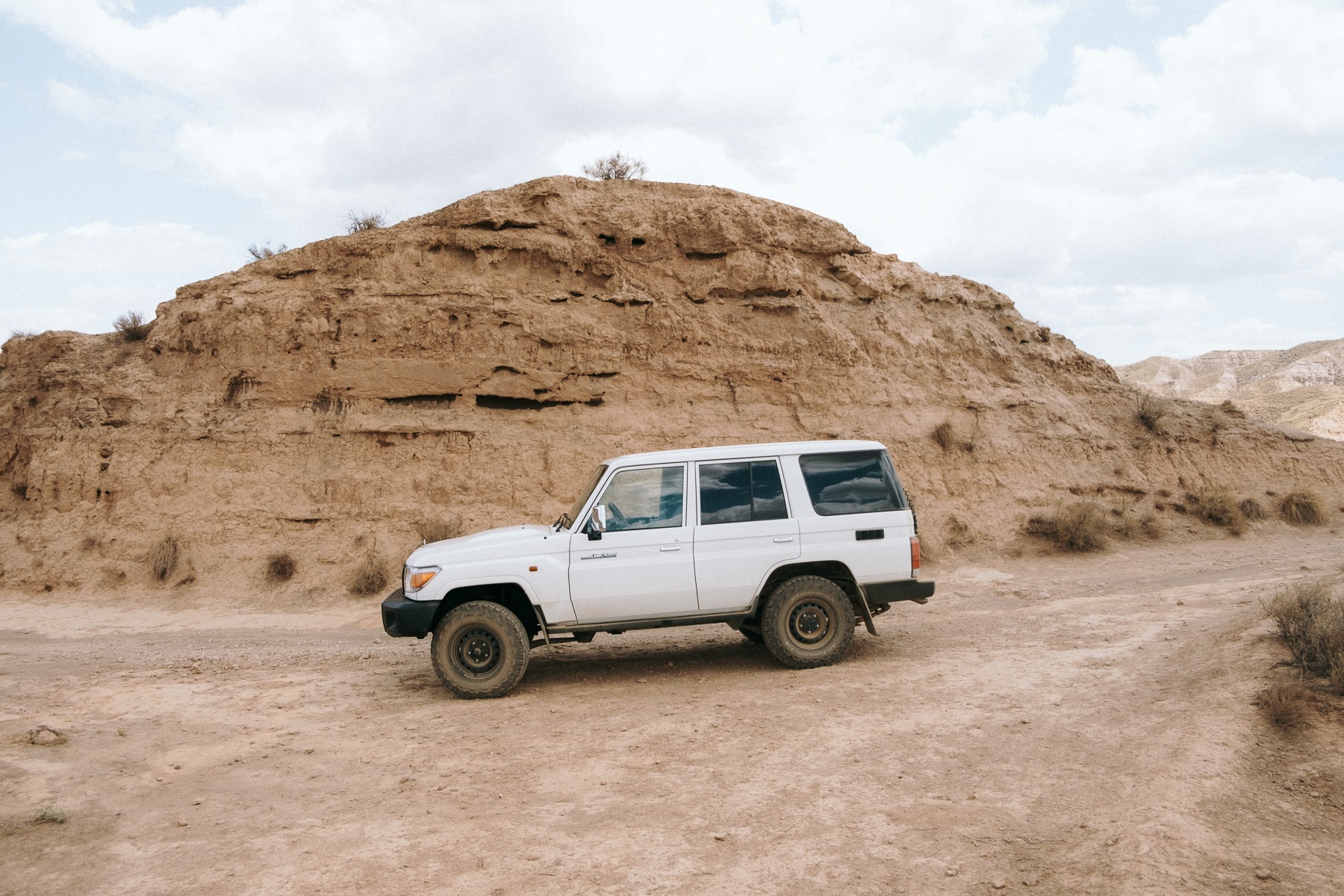
Our trip: May 2023, in our Land Cruiser 76, on a road trip through Spain.
What the Gorafe Desert is
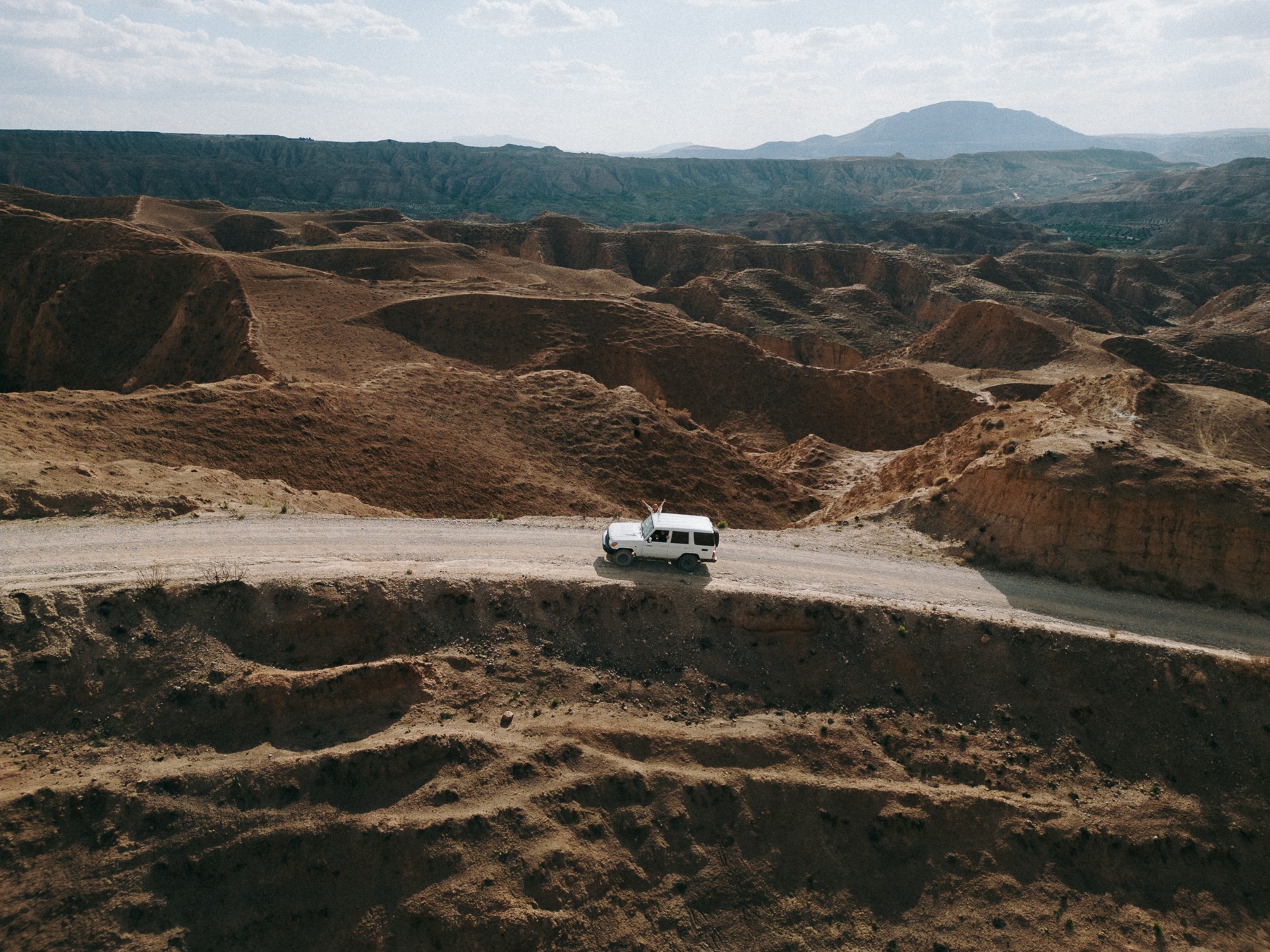
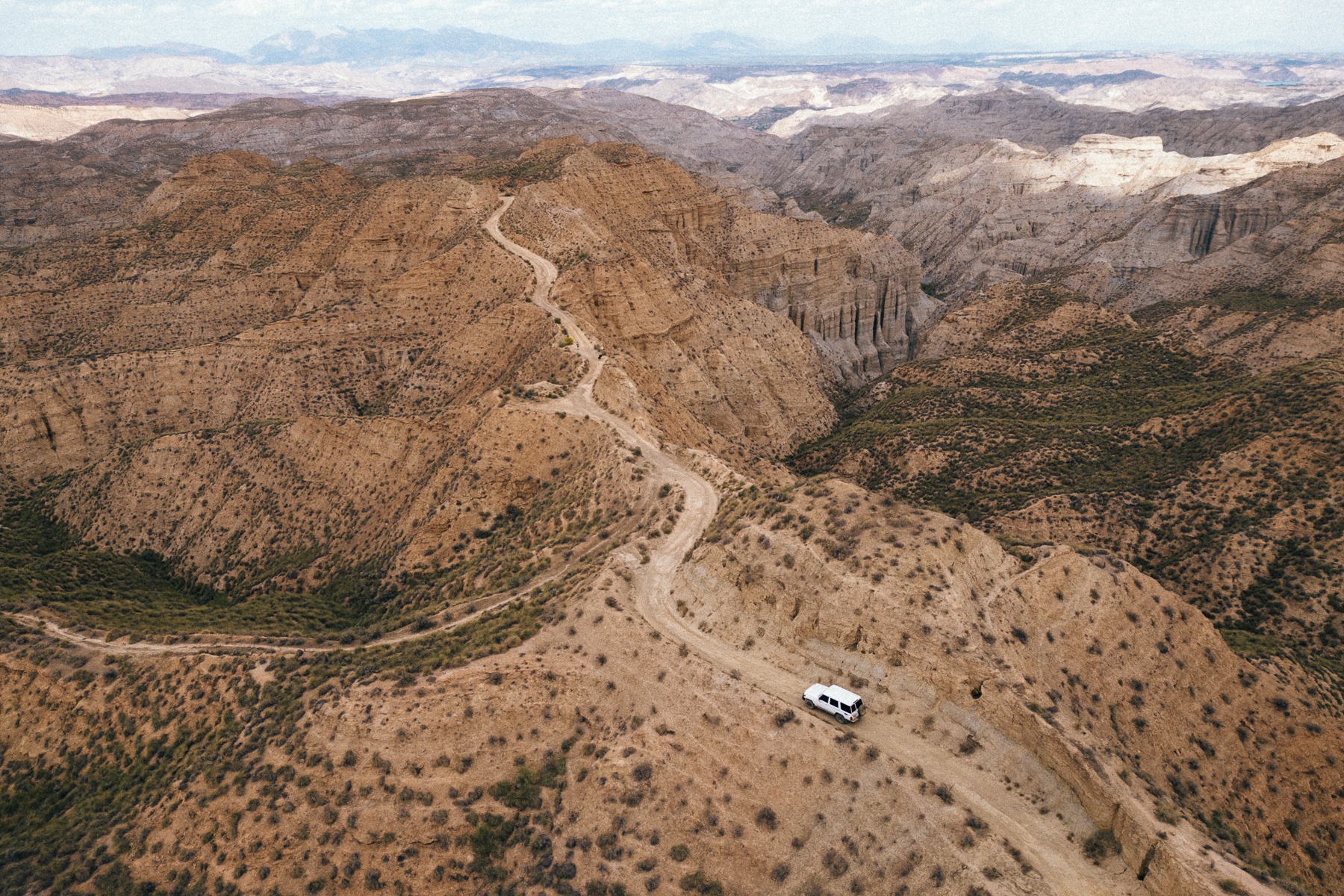
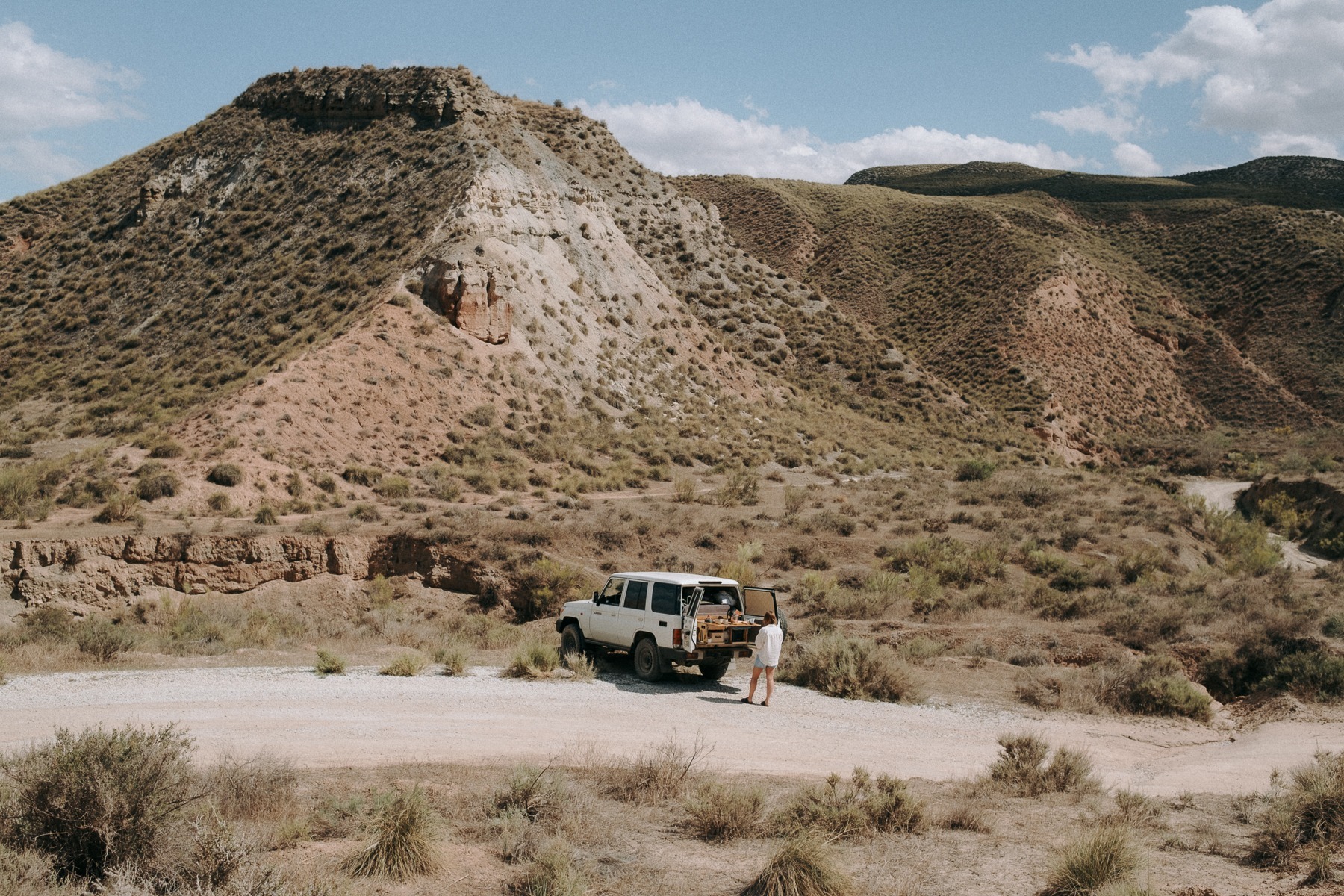
The Gorafe Desert, also called Los Coloraos or the badlands of Gorafe, lies in the north of Granada province, in the Guadix-Baza basin. Over 100,000 years ago this was a lake surrounded by mountains. When it drained through the Guadiana Menor towards the Guadalquivir, erosion carved the soft sediments into the gullies, ridges and canyons you see today, in shades of red, orange and white. The whole area is part of the Granada Geopark, a UNESCO Global Geopark since 2020.
Getting there
From Granada, Malaga or Almería, take the A-92 towards Guadix and Baza. There is a signposted exit for Gorafe, and from there the GR-6100 takes you down into the valley. Fill up and bring water and food before you head into the desert.
Gorafe Megalithic Park
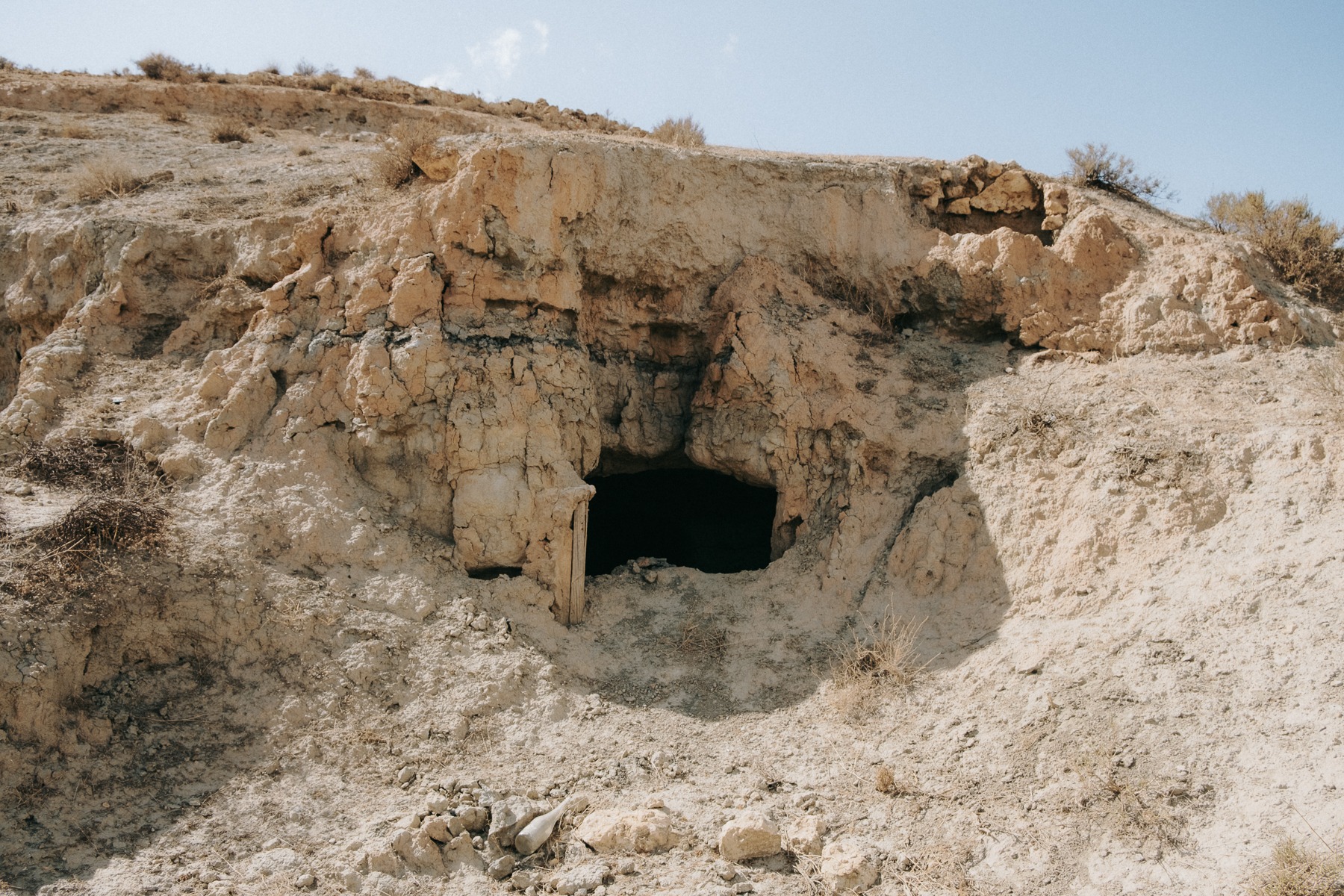
Around Gorafe there are more than 240 dolmens, prehistoric burial chambers spread over ten necropolises, one of the largest concentrations in Europe. A signposted park and an interpretation centre help you find the most interesting ones. You will also see cave houses dug into the soft rock, a way of building this area is famous for.

Los Filetes del Diablo and Llanos de los Olivares
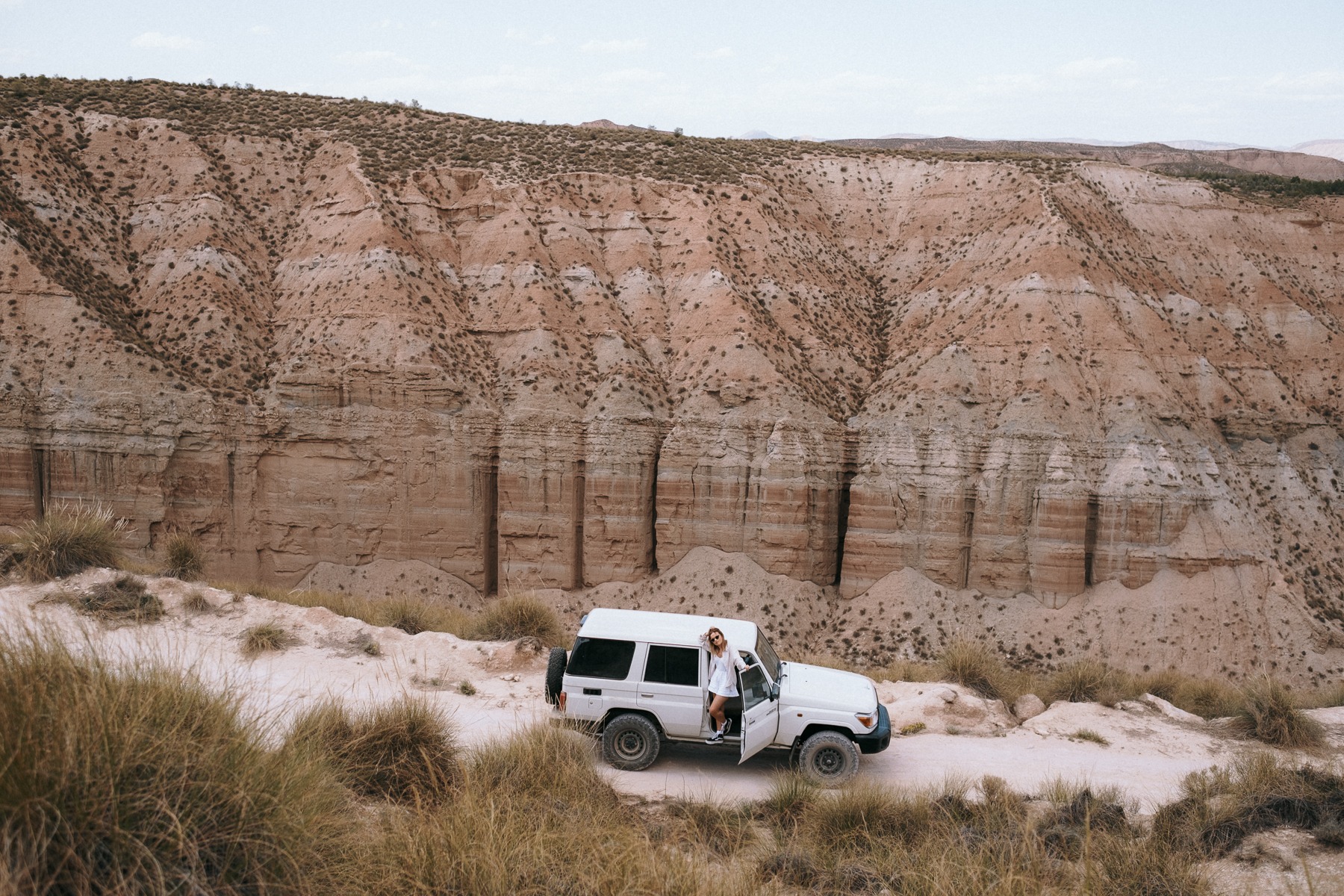
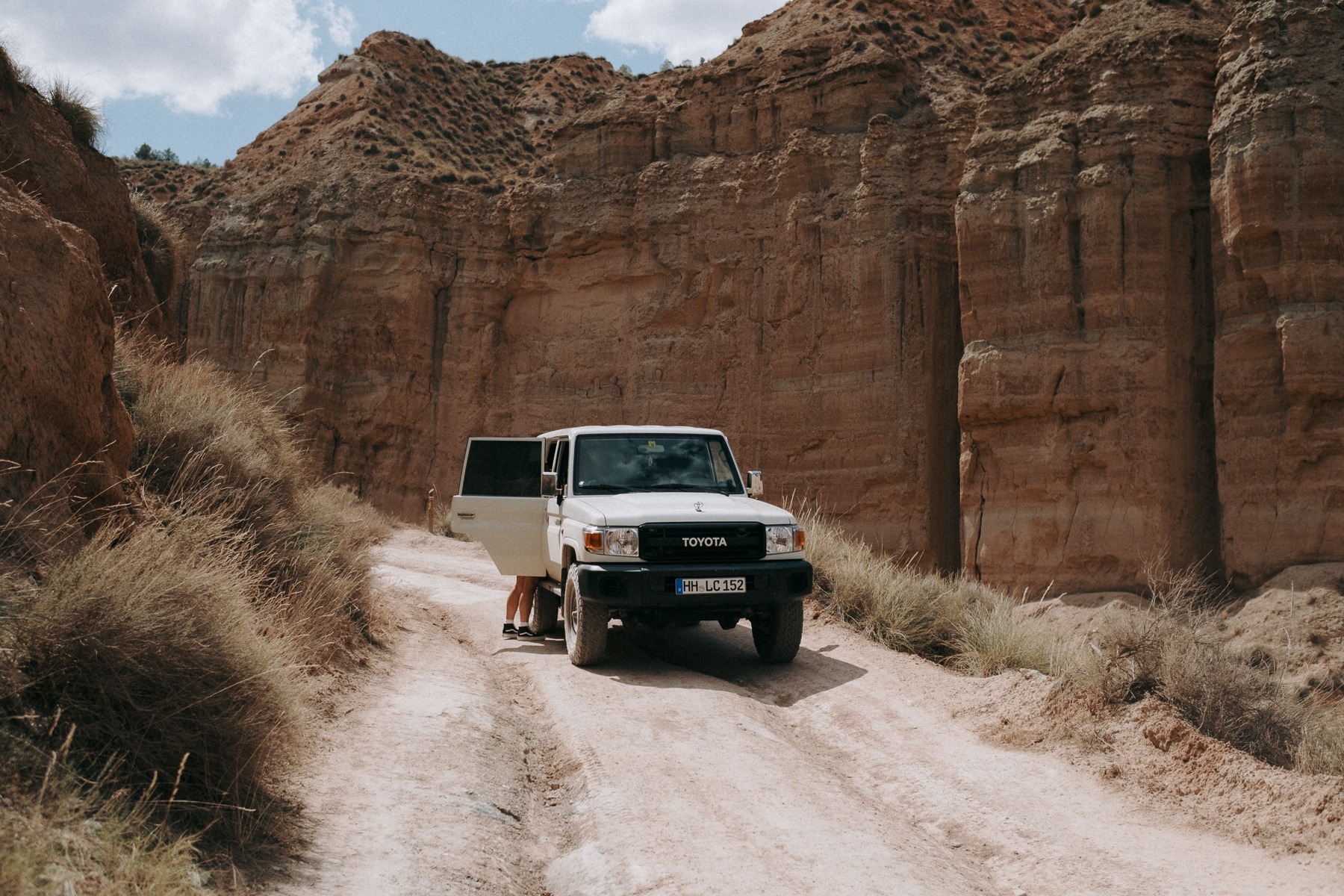
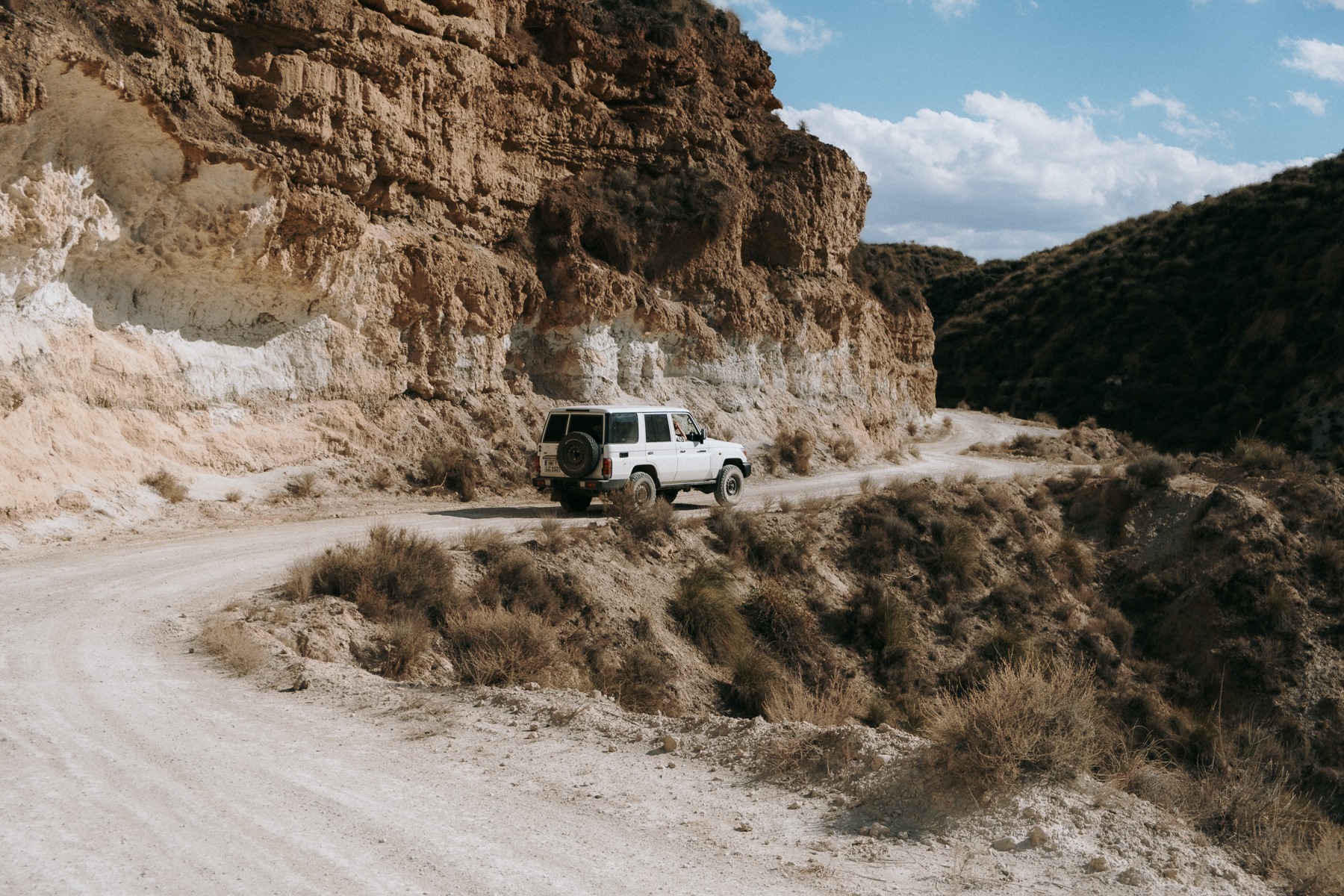
The steep, layered walls of the Filetes del Diablo look like a small Grand Canyon, and it is hard to believe a track runs through them. Up on the plain, the Llanos de los Olivares surprise you in the other direction: open dehesa with holm oaks, pines and green pasture, right at the edge of the gorge.
The Geodésico viewpoint and Los Coloraos
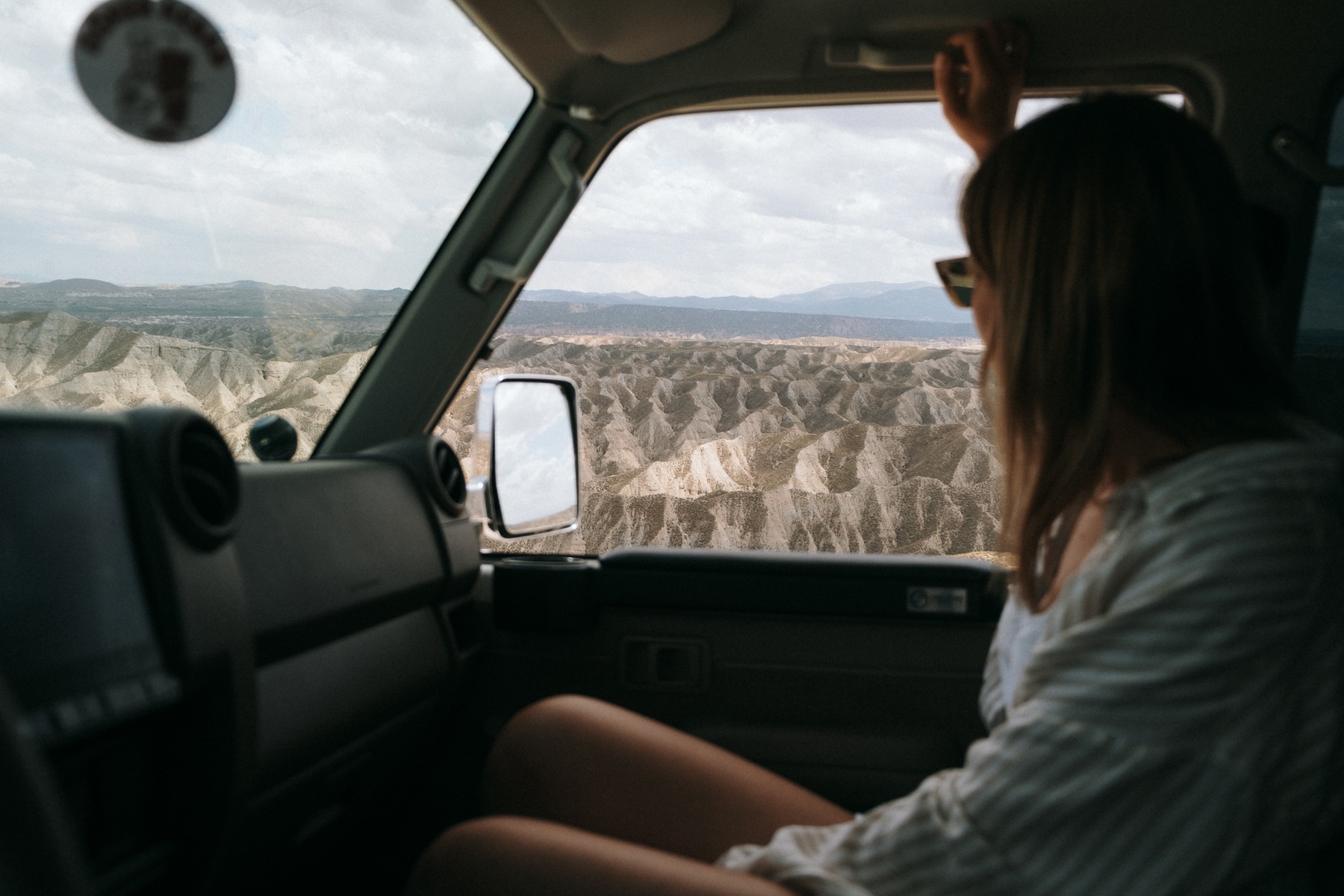
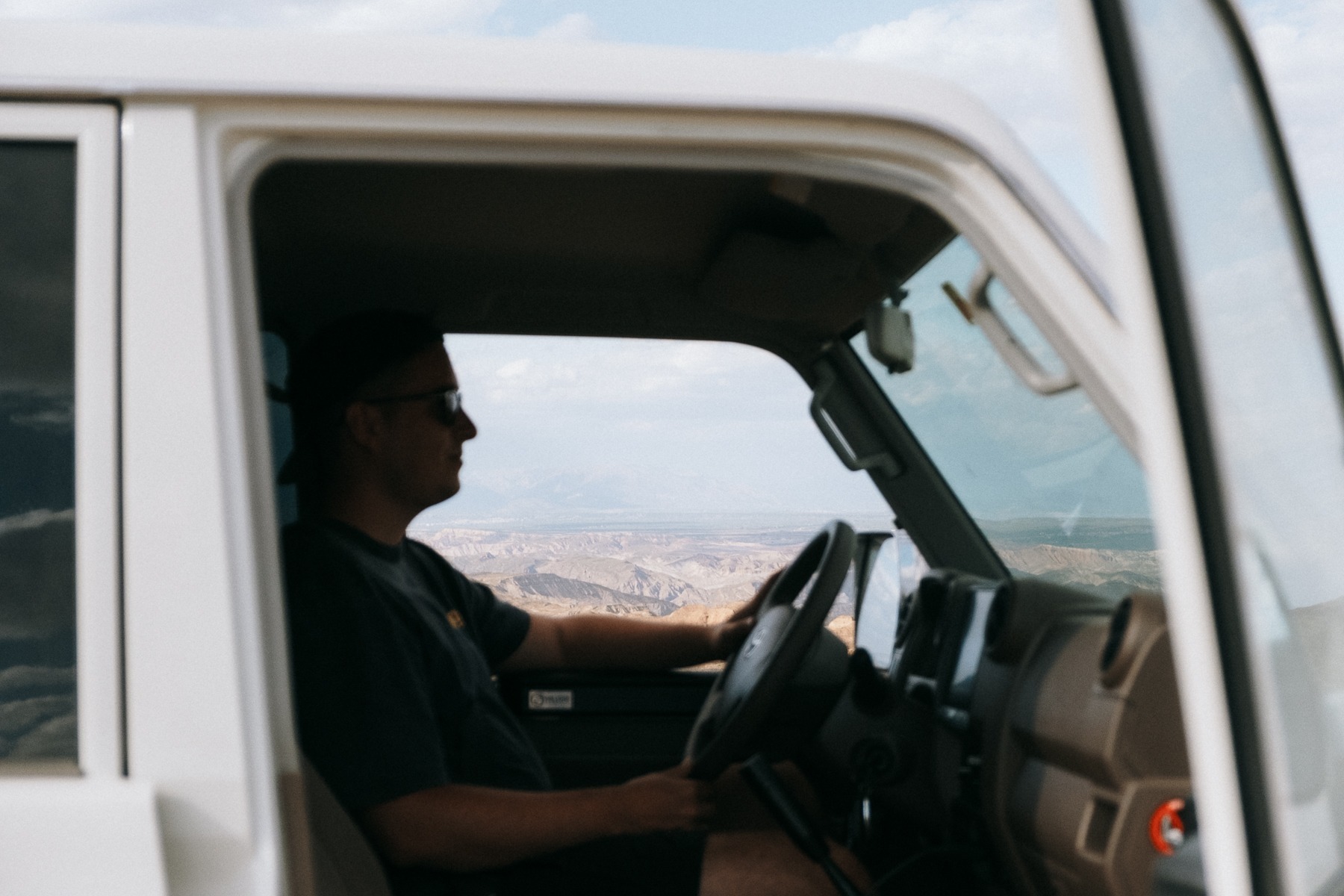
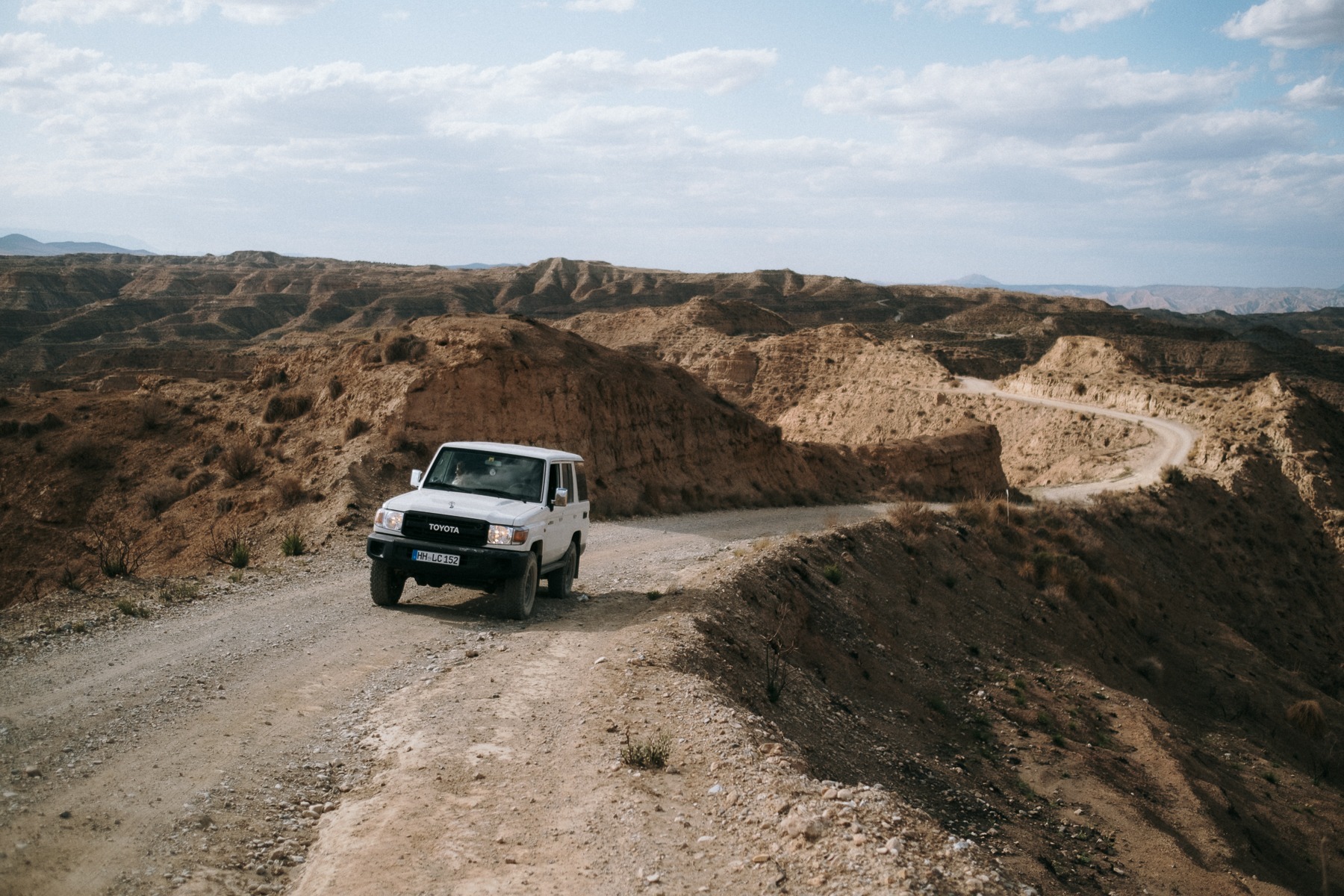
The Geodésico viewpoint gives you a 360° view of the desert and the mountain ranges around it: Cazorla, Segura and Las Villas, Castril and Baza, Sierra Nevada to the south, Huétor to the west and Mágina to the north-east. Those mountains block the rain, which is why it is so dry here.
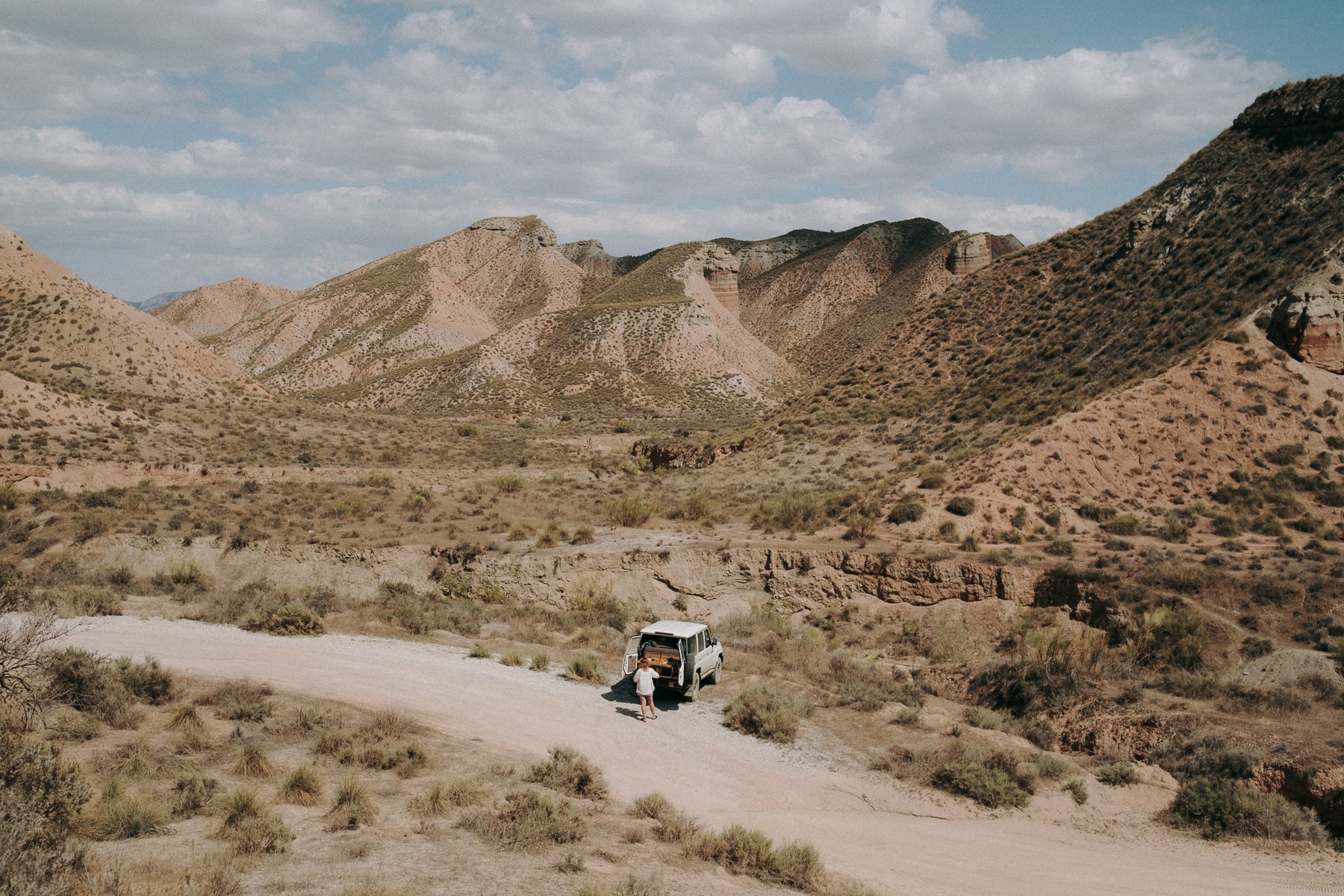
Los Coloraos is the heart of the desert, where red and orange slopes are streaked with white layers, like an open geology book. After the rare heavy rain the valley floors turn green. Driving through it in the silence of the desert was unforgettable.
Driving the Gorafe Desert
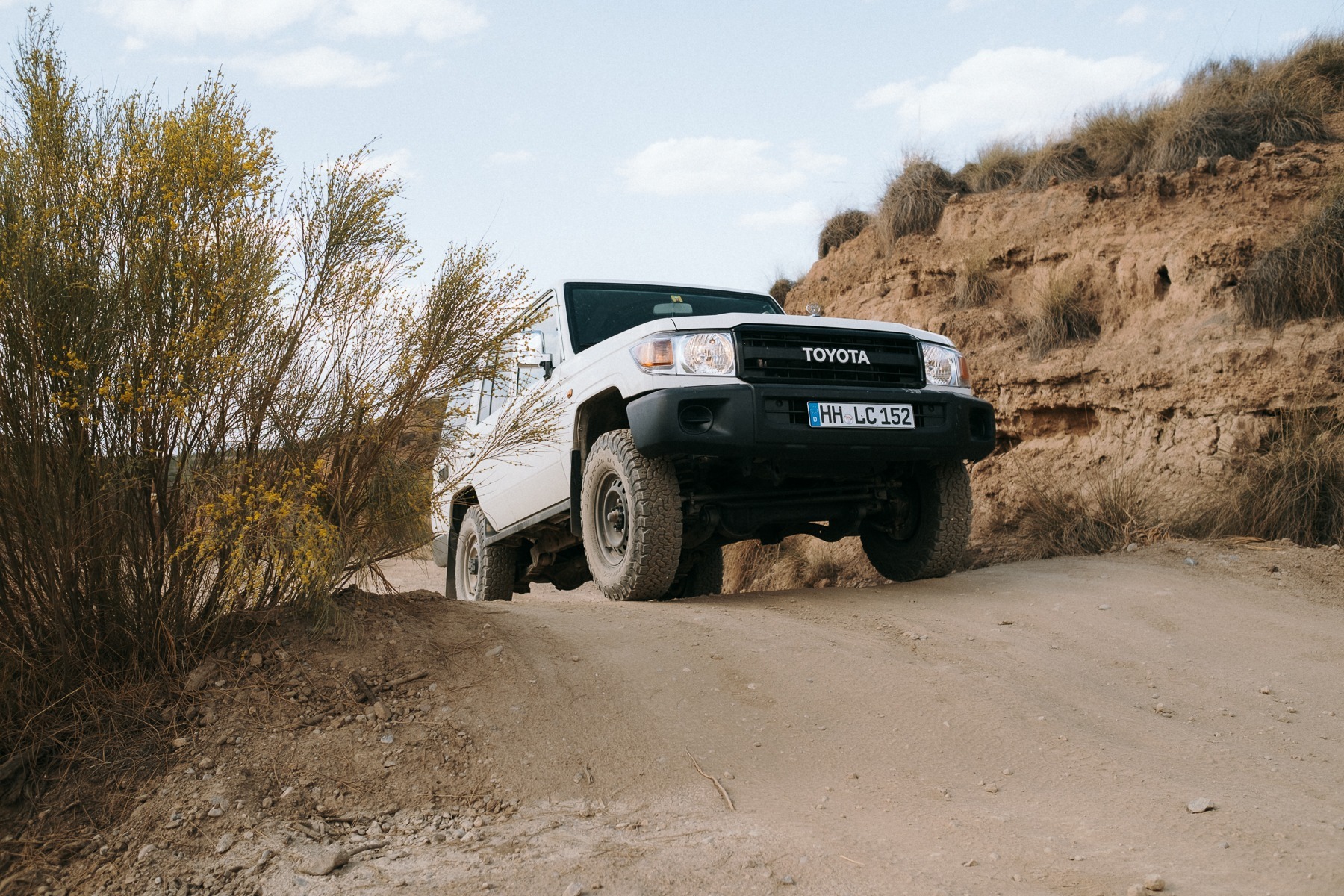
We spent the day driving the tracks in our Land Cruiser, and it is a great place for it. Most tracks are dirt and gravel, and some sections are narrow, steep or rutted, so a 4x4 or at least a high-clearance car makes life much easier. Stay on existing tracks, as this is a protected Geopark. Avoid the tracks after heavy rain, bring plenty of water, and in summer drive early or late in the day.
Our friends at Iberica Overlands have put together a full off-road loop that starts and ends in the village of Gorafe, which is a good way to see it all.
FAQ
Where is the Gorafe Desert?
In the north of Granada province in Andalusia, between Guadix and Baza, about an hour from Granada by car.
Do you need a 4x4 for the Gorafe Desert?
Not for the main viewpoints, but the tracks inside the desert are rough in places, so a 4x4 or a high-clearance car makes it much easier.
How many dolmens are there in Gorafe?
More than 240, spread over ten necropolises, which makes it one of the largest concentrations of dolmens in Europe.
When is the best time to visit the Gorafe Desert?
Spring and autumn. Summer days can reach 45°C, and winters are cold. We were there in May, which was a good time to drive the tracks.
Final thoughts
The Gorafe Desert does not feel like Europe at all: canyons, red ridges, prehistoric tombs and cave houses dug into the rock. If you are driving through Andalusia with a capable car, give it at least a day.
Read why we think Spain is great for overlanding.