At a glance
In one sentence: overlanding is self-reliant travel by vehicle, where the journey matters as much as the destination.
What it means to us: it is what Past the Dust is about, discovering what lies at the end of the road, and the road itself.
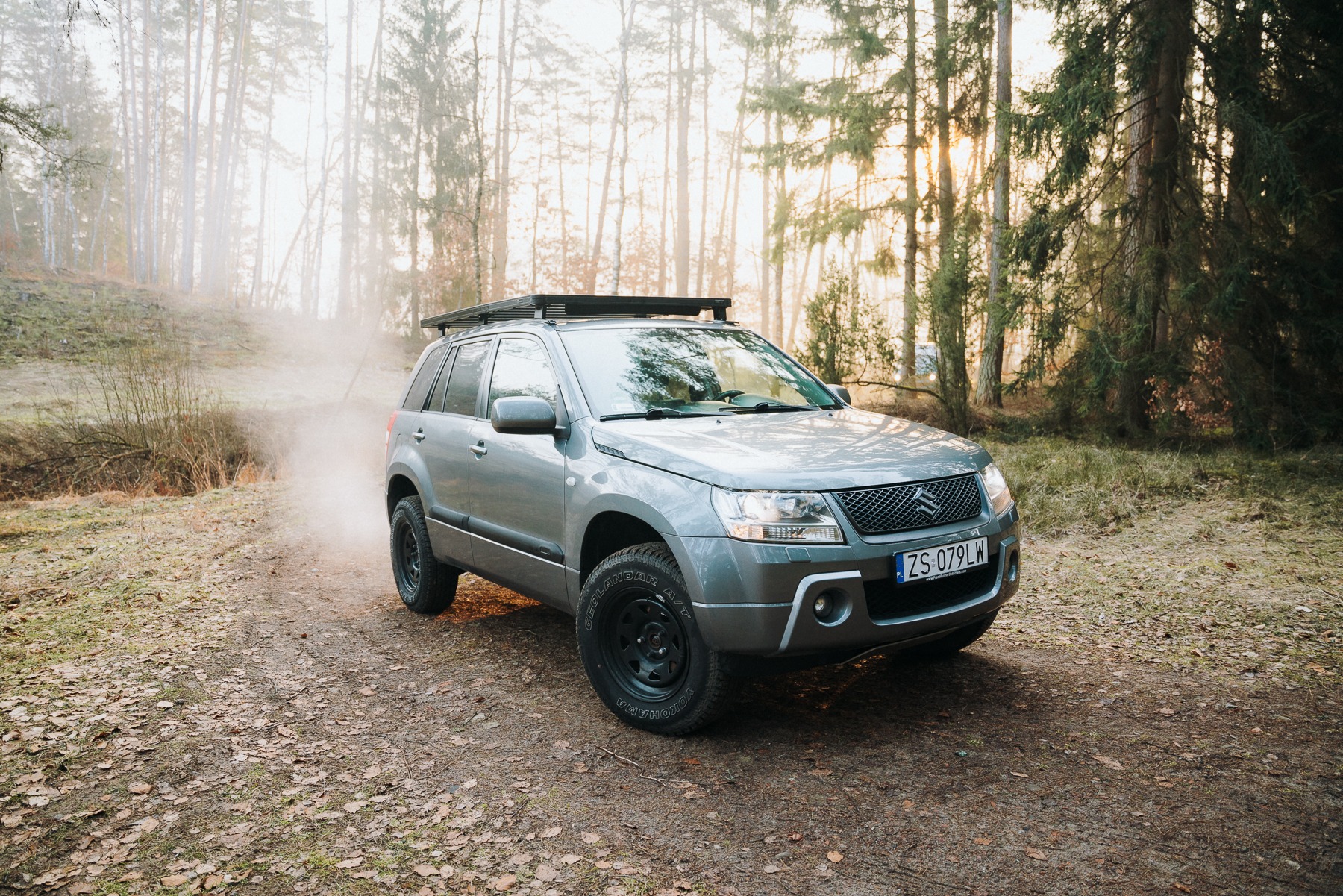
Our cars: first a Suzuki Grand Vitara with a soft-shell rooftop tent, now a Toyota Land Cruiser 76 with a hard-shell tent.
How we travel now: as a family of three, starting with weekends, with trips getting longer every time.
What is overlanding?
Overlanding is independent, self-reliant travel by vehicle, usually to remote places, where the journey itself is the point. You live out of your vehicle, sleep in a tent on the roof, in the back or on the ground, cook your own food and carry what you need to get by for days at a time. Trips can last a weekend or several years, and many of them cross borders.
It is not the same as off-roading. Off-roading is about driving difficult terrain for its own sake, while overlanding is about getting somewhere, and the rough tracks are just part of the way. It is not quite camping either: a camping trip usually means one spot, while an overlanding trip keeps moving.
Where the term comes from
The word comes from Australia. In the 19th century, "overlanders" were drovers who moved cattle and sheep across huge distances to new pastures and markets. In the 1950s and 60s the surveyor and road builder Len Beadell cut thousands of kilometres of tracks through the remote outback, including the famous Gunbarrel Highway, and opened up the interior to a new kind of traveller. Today overlanding is a global culture, from Australia and southern Africa to North America, Morocco and the Balkans.
What overlanding means to us
For us, overlanding is simply what Past the Dust is about: discovering what lies at the end of the road, but also the road itself. Sometimes the best part of a trip is the place we were heading for, and sometimes it is the gravel track that got us there.
How we got into it
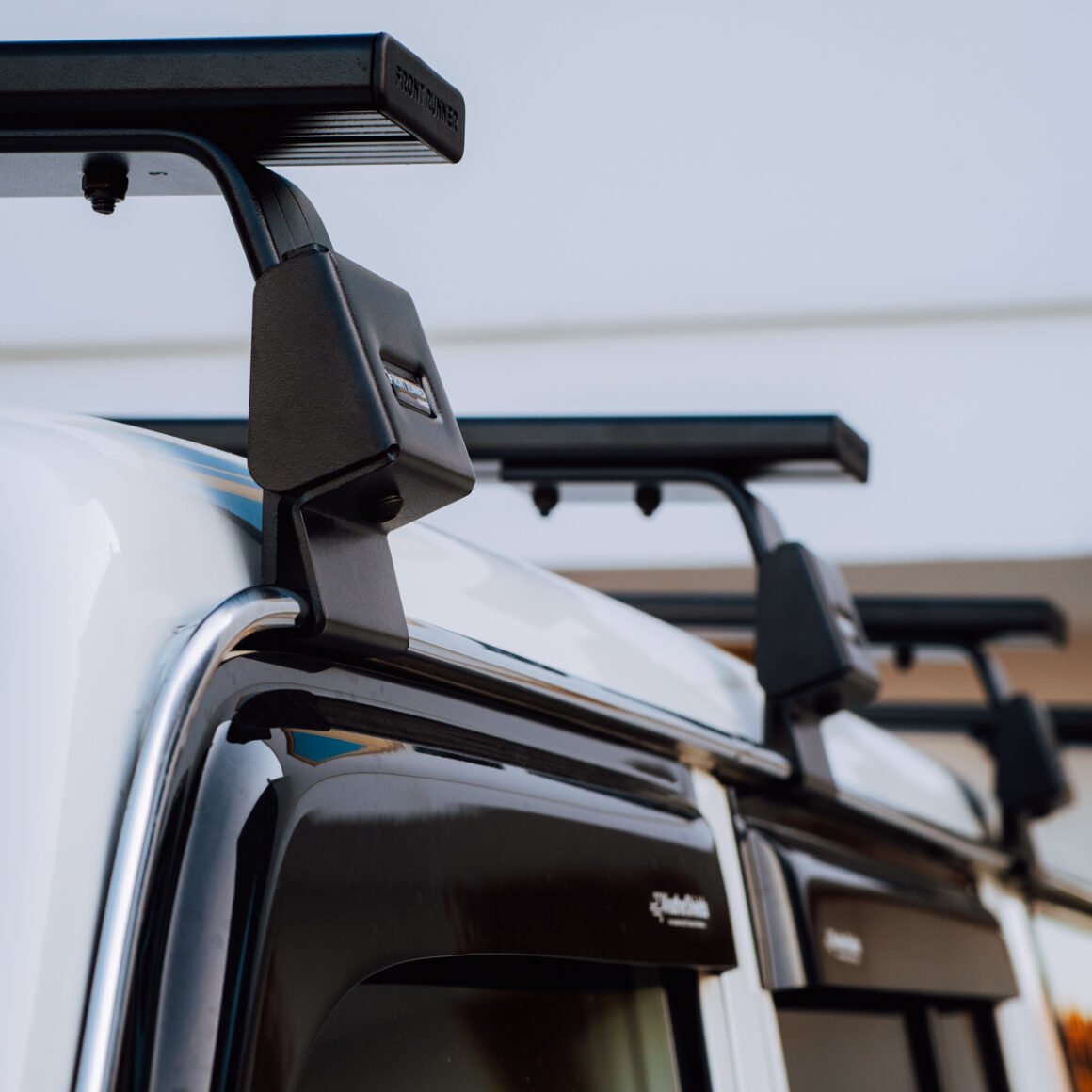
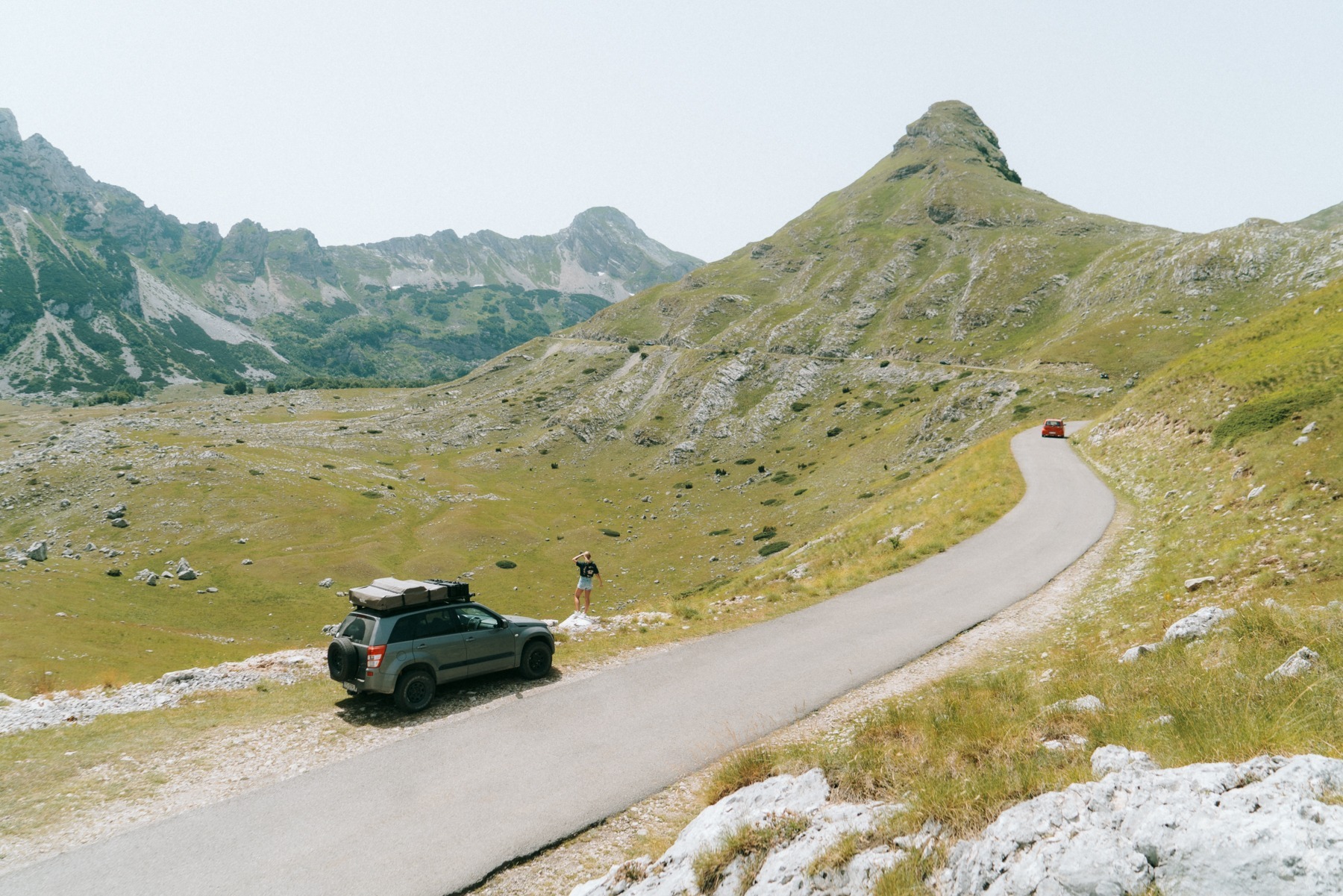
Our first overlanding car was a 2006 Suzuki Grand Vitara 2, which we built up with a small lift, all-terrain tyres, a roof rack and a soft-shell Front Runner Feather-Lite rooftop tent. In two years we covered nearly 50,000 km, including a 5,000 km road trip to Albania.
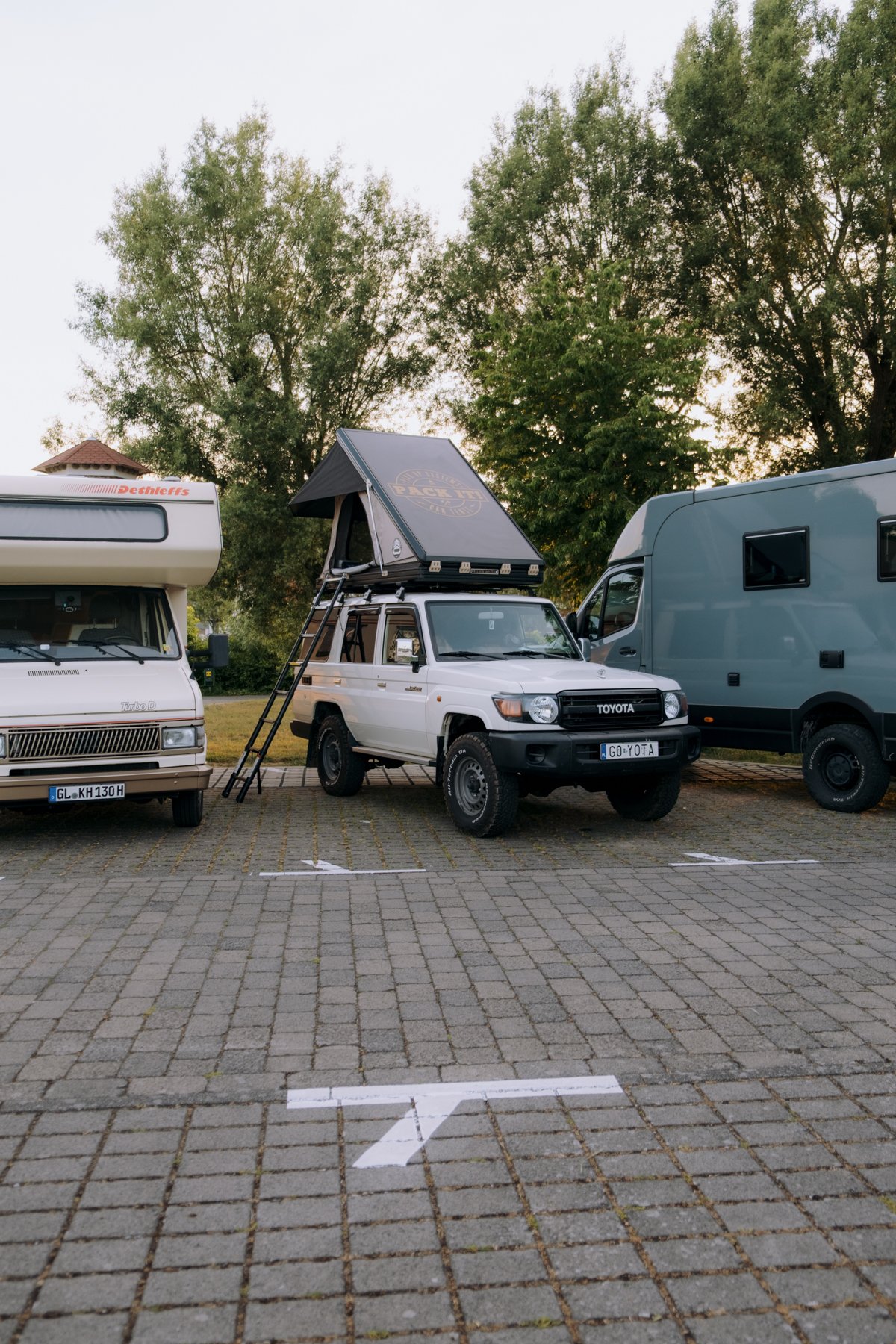
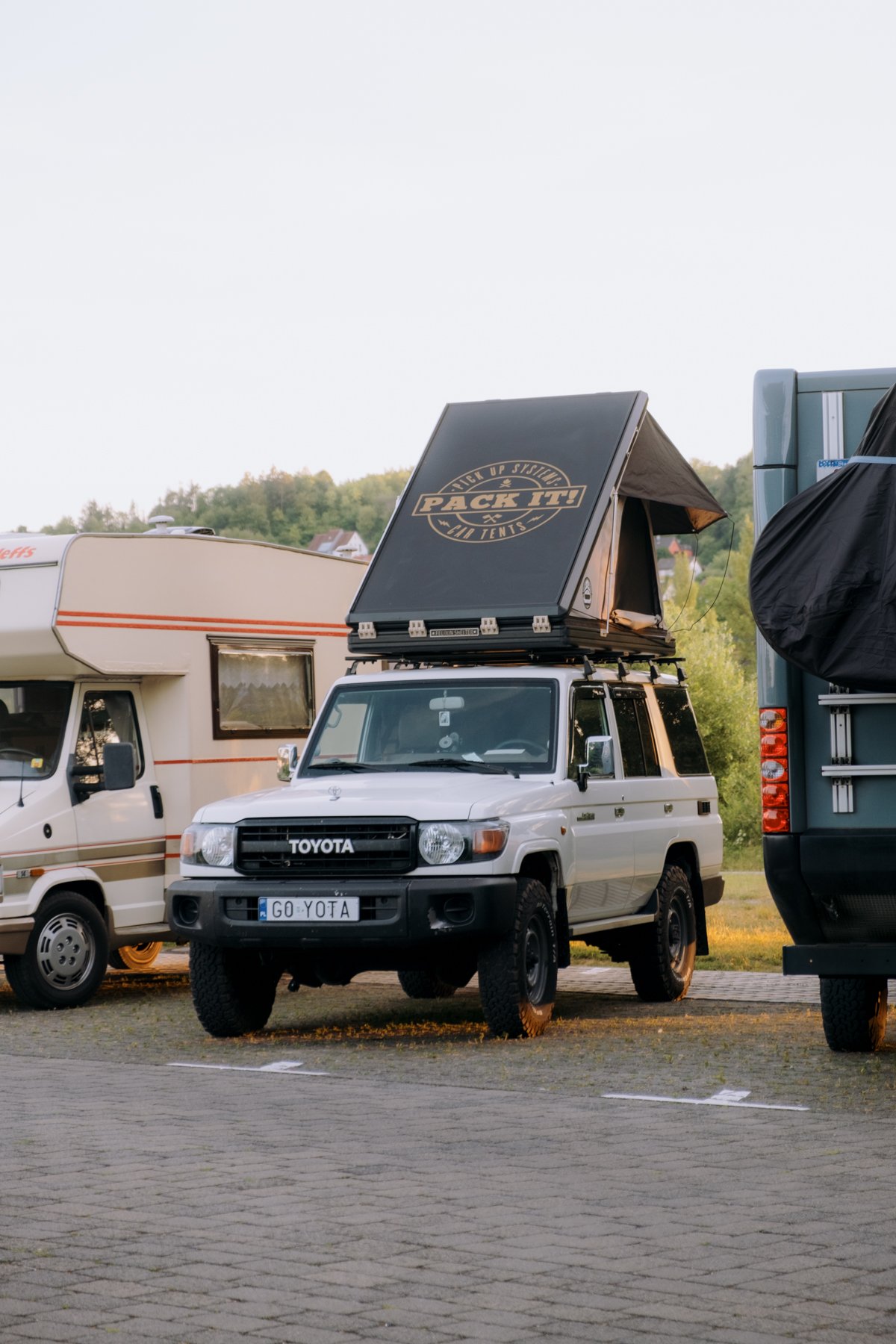
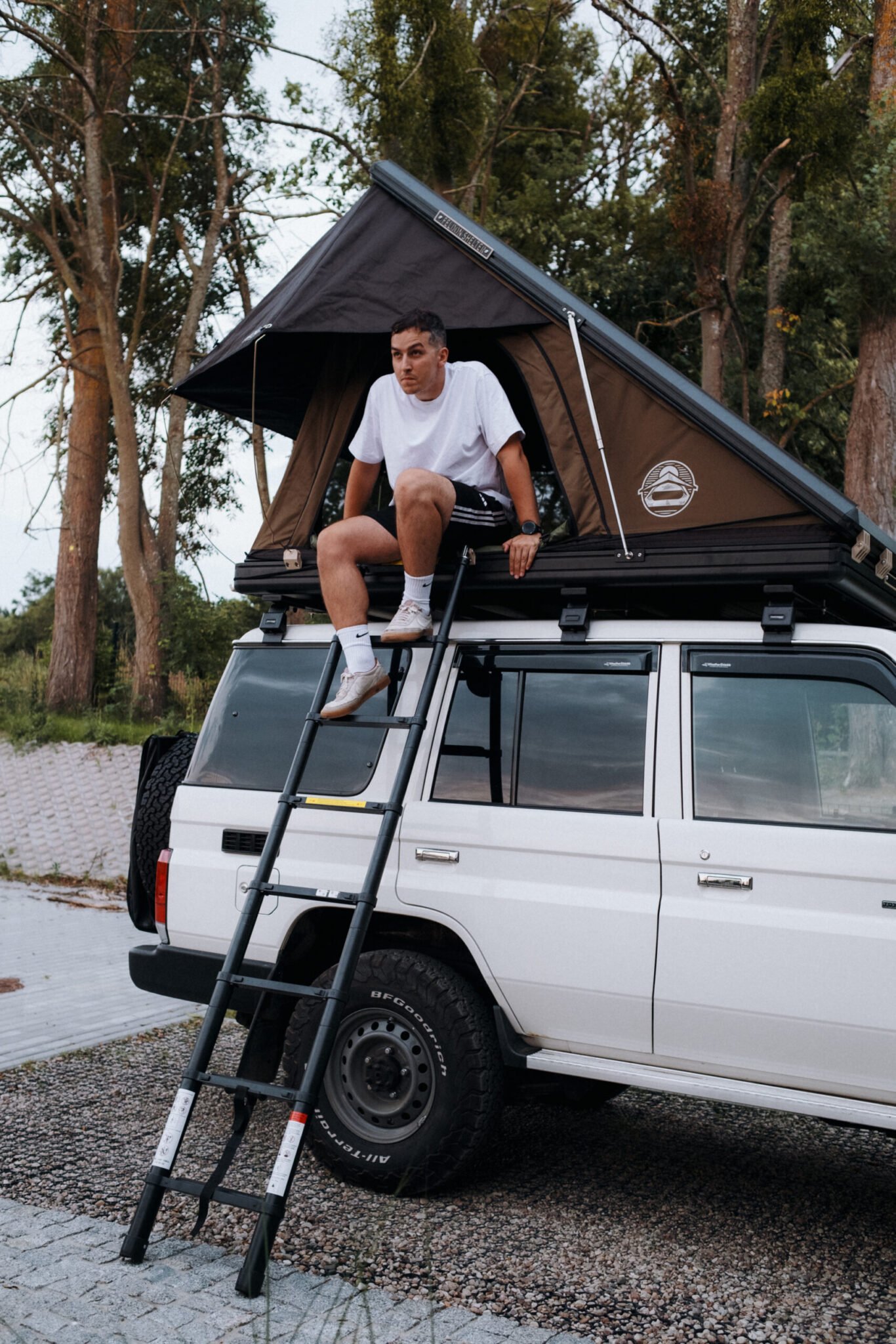
Then came a 2021 Toyota Land Cruiser 76. On our three-week road trip through Spain we slept inside it, with a Land Box by Escape Vans in the back. Today we sleep on the roof again, in a hard-shell Hawk's Nest V2 Wide.
Overlanding with a child
Today we travel as a family of three, with our son. We started again with weekends close to home, to learn what works for all of us, and our trips are getting longer every time. All three of us sleep in our rooftop tent, which makes setting up camp quick, wherever we stop.
Overlanding in Europe
You do not need a desert or a jungle to go overlanding. Europe is full of it: mountain roads in Montenegro's Durmitor, the dramatic drive up Biokovo in Croatia, the desert-like badlands of Gorafe in Spain and Albania's wild coast roads.
The big difference from places like Australia is where you can sleep. Rules on wild camping vary a lot from country to country. The Nordic right to roam is generous for tents, while much of southern Europe, including Spain and Croatia, restricts or bans it. We sleep both wild and at campsites, and we always check the local rules first.
Which vehicle do you need?
Almost any vehicle can work, from a small SUV to a pick-up, a van or a motorbike. The classics are the Toyota Land Cruiser, the Land Rover Defender, the Jeep Wrangler and the Mitsubishi Pajero, but you do not need one to start. Our first overlanding car was a modest Suzuki, and it took us much further than we expected. What matters most is a car you trust and can fix on the road.
Essential gear
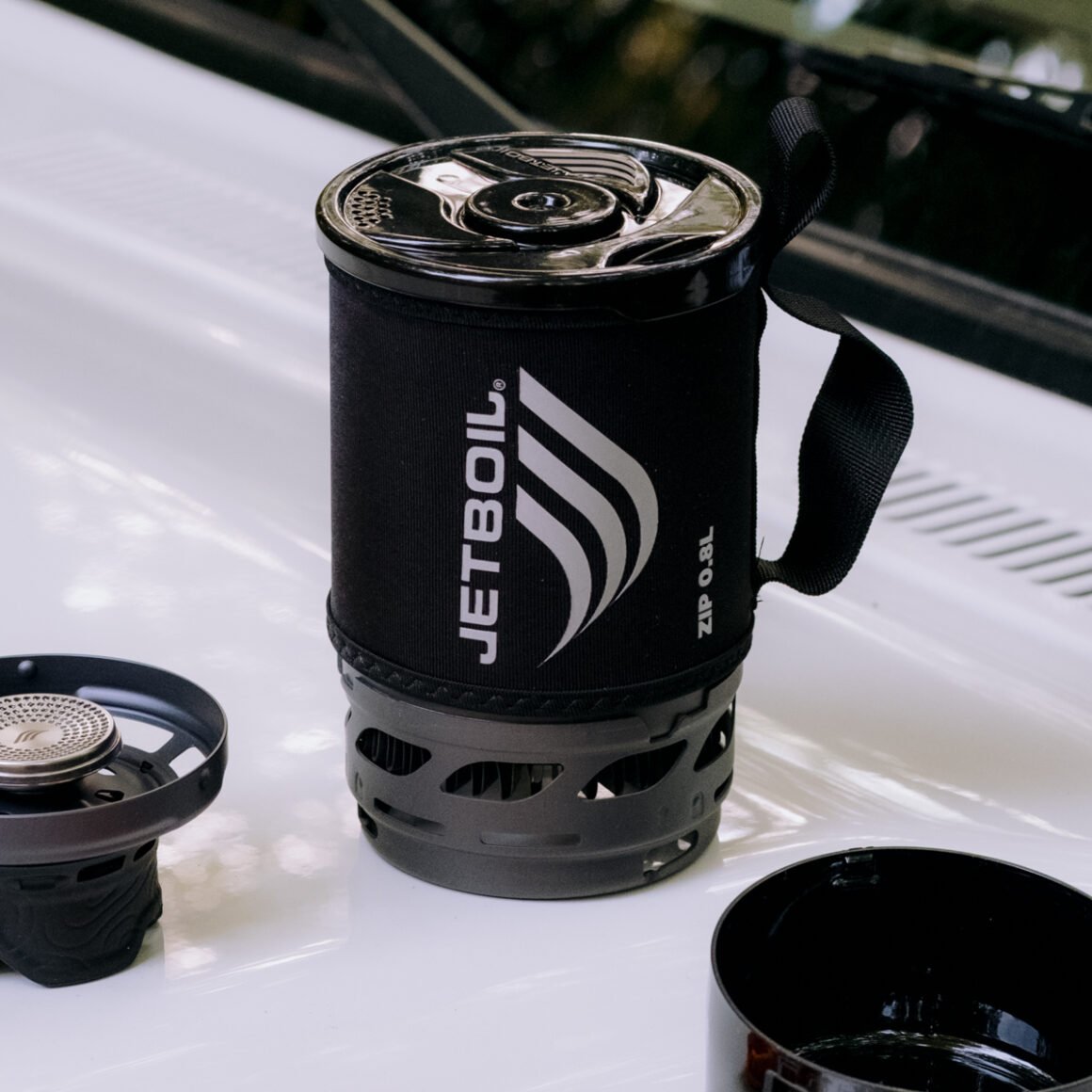
The vehicle gets you there, but the gear decides how comfortable you are. The basics are somewhere to sleep, enough water, a way to cook, a reliable power source, a toolkit and recovery gear, and shade. Here is what we use and have used: a rooftop tent (we have tried soft and hard shells), an EcoFlow River 2 Max for power, thermal window mats when sleeping inside, and a travel tripod to bring the stories home.
How to start
Start small. Go away for a weekend close to home, try your gear, see what you miss and what you never use. Then go a bit further each time. That is exactly how we did it, first as a couple and now again as a family.
FAQ
What is overlanding?
Self-reliant travel by vehicle, often to remote places, where you live out of your car and the journey matters as much as the destination.
What is the difference between overlanding and off-roading?
Off-roading is about driving difficult terrain for its own sake. Overlanding is about the journey, and rough tracks are just part of the way.
Do you need a 4x4 for overlanding?
Not to start. Our first overlanding car was a Suzuki Grand Vitara, and many people start with an ordinary SUV or a van.
Can you go overlanding with a child?
Yes. We travel as a family of three, starting with weekends close to home and going a bit longer each time.
Is wild camping allowed in Europe?
It depends on the country. The Nordic right to roam is generous for tents, while much of southern Europe, including Spain and Croatia, restricts or bans it. Always check the local rules.
Final thoughts
Overlanding does not need a perfect definition, an expensive truck or a remote continent. It needs curiosity about what lies at the end of the road, and the patience to enjoy getting there. See you past the dust.